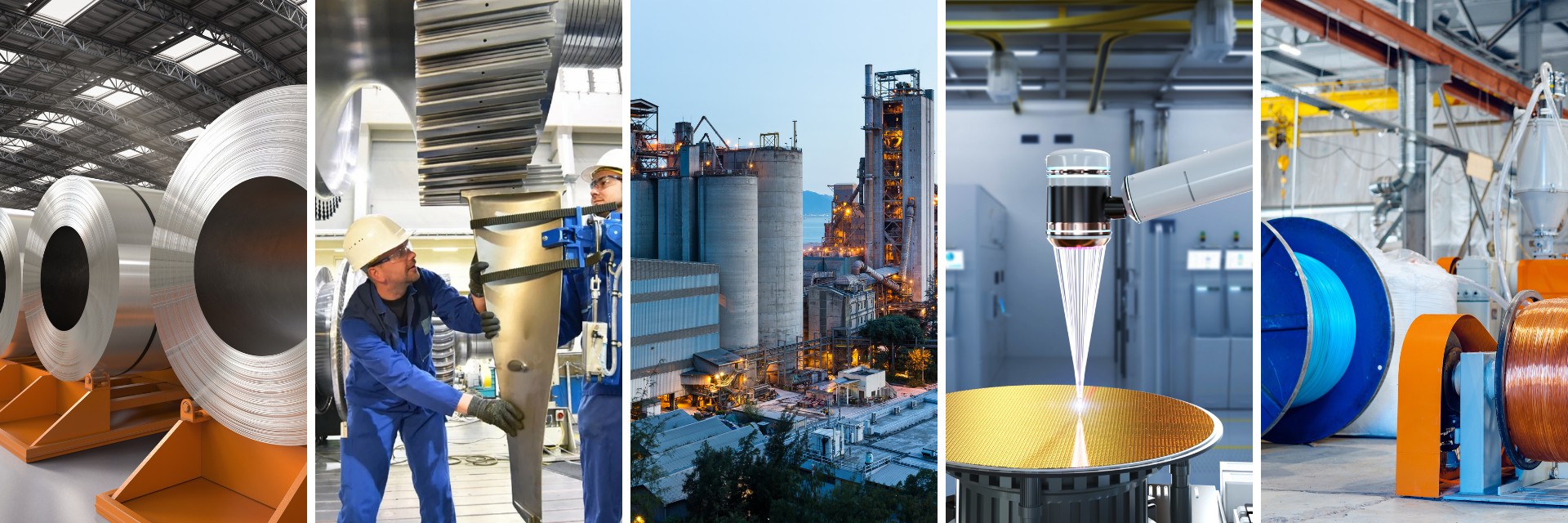
Manufacturing × Singapore
Manufacturing & Industrial Executive Search Singapore | Gladwin
When a multinational establishes its APAC manufacturing coordination hub in Singapore—often in Biopolis or Fusionopolis for biotech, or Tuas South for precision engineering—its CFO and CHRO choose Gladwin because we curate leaders who can toggle between Singapore's Industry 4.0 smart factories and high-volume plant operations in Chennai or Pune. Our proprietary database of 1,800+ manufacturing CXOs maps who among Singapore's regional COOs has genuine India plant turnaround experience, who can navigate EDB incentives, and who commands both Mandarin and Tamil talent networks across Southeast Asia.
Read time
18 min
Mapped depth
1,800+ manufacturing-industrial CXO profiles mapped across Singapore, Malaysia, and Thailand, with deep tagging for India-APAC mobility and Industry 4.0 transformation experience
Pay vs
Bengaluru · Pune · Chennai
Singapore's manufacturing-industrial executive search paradox is acute: APAC headquarters demand India-experienced leaders who can manage scale, while Singapore-based manufacturing facilities require precision, automation literacy, and quality-first operating models utterly unlike India's cost-driven manufacturing environments. The island-state's Jurong Lake District and Changi Business Park house advanced electronics, aerospace, and specialty chemicals plants—not labour-intensive factories—yet many mandates seek leaders who can simultaneously manage regional supply chains across Indonesia, Vietnam, and India. This duality makes talent profiling extraordinarily complex.
For candidates
Senior manufacturing executives engage with Gladwin's Singapore practice because we understand that a VP Operations running Keppel Corporation's offshore & marine division is not interchangeable with a Plant Head managing electronics assembly for a Taiwanese OEM in Changi Business Park. We represent mandates where APAC regional scope, P&L authority, and equity participation are clearly articulated—not vague 'regional coordination' roles—and where clients respect that a ₹6 Cr package in Singapore must include housing, schooling allowances, and long-term incentive structures that reflect true purchasing power parity and career trajectory.
Differentiation
Gladwin's edge in Singapore manufacturing-industrial search lies in our bilateral India-Singapore corridor intelligence: we know which India-origin CEOs in Jurong's chemical parks are open to repatriation for flagship plant leadership in Gujarat or Tamil Nadu, and which Singapore-based MNC regional heads are genuinely willing to relocate for greenfield defence manufacturing mandates in Uttar Pradesh. Our Bengaluru, Mumbai, and Chennai partners conduct on-the-ground reference calls with former colleagues now in India operations, providing cultural fit and execution risk assessments that Singapore-only headhunters cannot replicate.
When a European precision engineering conglomerate decided to consolidate its APAC manufacturing coordination function in Singapore's Jurong Lake District—migrating from Hong Kong and Tokyo—the board mandate was unambiguous: find a Group COO who could orchestrate procurement from Taiwanese suppliers, manage contract manufacturing in Vietnam and Indonesia, oversee R&D collaboration with A*STAR institutes in Fusionopolis, and personally commission a lights-out assembly line in Changi Business Park. The successful candidate, a former Keppel Corporation executive with stints in Larsen & Toubro's Indian heavy engineering division, commanded a ₹7.2 Cr package including housing, schooling for three children, and performance equity tied to regional EBITDA margin improvement. This is the reality of manufacturing executive search in Singapore today.
Singapore is not a high-volume manufacturing hub—it is the brain of APAC industrial operations. Marina Bay Financial Centre houses the treasury and trade finance teams that fund pan-Asian supply chains; One-North's Biopolis cluster incubates biopharma process innovation; Jurong's chemical parks refine specialty polymers and advanced materials; and Changi Business Park coordinates electronics contract manufacturing across the region. For multinational industrials, Singapore is where strategy, IP, and capital allocation decisions are made—even if the stamping presses, injection moulding lines, and final assembly happen in Malaysia, Thailand, India, or Vietnam. Consequently, manufacturing leadership roles in Singapore demand a rare hybrid: executives who can read a P&L with investment-banking precision, engage with EDB on R&D grants and tax incentives, yet also walk a shop floor in Chennai or Batam and diagnose why first-pass yield is stuck at 87 per cent.
Gladwin International & Company has served as the retained search partner of choice for manufacturing-industrial mandates in Singapore since our regional APAC practice expansion in 2018. Our Singapore office, embedded within the city-state's tight-knit industrial ecosystem, maintains a proprietary database of 1,800+ CXO profiles spanning electronics, aerospace & defence, specialty chemicals, precision engineering, and biotech manufacturing. We understand that a VP Operations managing a semiconductor back-end facility in Singapore is not substitutable with a Plant Head running a white-goods factory in Pune—despite both being 'manufacturing leaders'—and our search methodology reflects this granularity. When a global chemical major seeks a Singapore-based APAC Supply Chain Head, or when a Taiwanese electronics OEM needs a Managing Director for its Southeast Asia manufacturing entity, CFOs and CHROs come to Gladwin because we deliver shortlists where every candidate has been reference-checked not just for technical competence but for cultural fluency across India, China, and ASEAN markets.
Primary keyword
manufacturing executive search Singapore
Sector focus
Industrial manufacturing
Questions this intersection answers
- What salary do manufacturing CEOs earn in Singapore versus India?
- How do I find a COO with both Singapore smart factory and India scale experience?
- Which Singapore business zones host advanced manufacturing headquarters?
- What are typical notice periods for manufacturing executives in Singapore?
- How does Gladwin assess cultural fit for APAC regional manufacturing roles?
- What equity structures are standard for manufacturing CXOs in Singapore?
- How long does a retained COO search take in Singapore manufacturing sector?
Industry × city reality
Three structural shifts are redefining manufacturing executive demand in Singapore and its India corridor during 2025–2026, creating a talent market characterised by acute scarcity at the senior-most levels and unprecedented compensation inflation.
First, the China+1 and US-China decoupling dynamic has positioned Singapore as the preferred regional headquarters for companies disaggregating manufacturing footprints. Global industrials—particularly in electronics, aerospace components, and specialty chemicals—are establishing 'control tower' functions in Singapore while building or expanding capacity in India, Vietnam, and Mexico. This bifurcation creates dual mandates: a Singapore-based APAC COO or VP Supply Chain who sets strategy, negotiates with Tier-1 suppliers, and manages IP and compliance, plus India-based Plant Heads who execute volume ramps and cost reduction. The challenge for executive search is identifying leaders who can credibly operate in both modes. A candidate who has only managed a 200-person precision machining facility in Jurong will struggle to commission a 5,000-employee greenfield plant in Tamil Nadu under the PLI scheme; conversely, an India-origin manufacturing leader accustomed to juggling labour relations and power outages may find Singapore's automated, compliance-heavy environment stifling. Gladwin's APAC-India practice bridges this gap by curating talent pools of executives who have genuinely worked in both contexts—often India-origin leaders who moved to Singapore MNC roles, or Singapore-based expats with multi-year India assignments.
Second, Singapore's Economic Development Board is aggressively investing in advanced manufacturing and Industry 4.0 as part of its 'Future of Manufacturing' roadmap, driving demand for technology-literate manufacturing executives. The government's co-funding of smart factory pilots, AI-driven predictive maintenance, and digital twin implementations means that traditional 'operations excellence' leaders—those who rose through Lean Six Sigma and kaizen—are no longer sufficient. Today's manufacturing CXOs in Singapore must converse fluently with data scientists about machine learning model accuracy, negotiate SaaS contracts for MES and ERP systems, and lead change management as blue-collar workforces shrink and engineering talent expands. This has created an unprecedented talent arbitrage: a Plant Head in India earning ₹1.8 Cr can command ₹5 Cr+ as an APAC VP Operations in Singapore if they have demonstrable digital transformation credentials. Search mandates increasingly specify 'experience deploying IoT sensors at scale' or 'led ERP migration for multi-site manufacturing network'—technical competencies that did not appear in CXO job descriptions five years ago.
Third, Singapore's biotech and advanced materials manufacturing sectors are expanding rapidly, often requiring hybrid science-operations leadership that is vanishingly rare. Biopolis now hosts over 40 biopharma R&D centres, many of which are scaling from clinical to commercial manufacturing. A biologics fill-finish facility or cell therapy cleanroom requires a Site Head who understands cGMP compliance, tech transfer from R&D, yield optimisation for high-value low-volume products, and regulatory interfacing with HSA and FDA—a profile that combines pharmaceutical operations with engineering rigour. Similarly, Singapore's push into sustainable aviation fuel, green hydrogen, and advanced battery materials (supported by EDB grants) is creating Plant Head and VP Engineering roles for leaders who can commission first-of-a-kind pilot facilities where the process chemistry is still being refined. These mandates often go unfilled for nine to twelve months because the talent pool is global and tiny; candidates are typically senior scientists who moved into operations roles at BASF, Evonik, or Johnson Matthey, and Gladwin's Europe-APAC search network becomes essential for access.
Across all three drivers, a common thread emerges: manufacturing executive search in Singapore is no longer a local market exercise. It is a global talent arbitrage problem where the successful search firm must simultaneously map passive candidates in Germany's Mittelstand, India's Tata and Adani groups, Taiwan's electronics OEMs, and Singapore's own Keppel, Sembcorp, and ST Engineering ecosystems—then assess each candidate's willingness to relocate, cultural adaptability, and compensation expectations against a specific mandate's budget and urgency.
Talent intelligence
Manufacturing leadership talent in Singapore clusters into four distinct archetypes, each with unique search access strategies and competitive dynamics that Gladwin navigates through differentiated engagement models.
Archetype One: The MNC Regional COO or VP Operations. These are senior executives—often in their late 40s to mid-50s—who oversee multi-country manufacturing networks from Singapore offices in Marina Bay Financial Centre or Changi Business Park. Typical employers include Siemens, ABB, Schneider Electric, Honeywell, and 3M, where the Singapore entity serves as APAC headquarters. Compensation ranges from ₹5 Cr to ₹10 Cr all-in, including housing, car, children's schooling, and long-term incentives tied to regional revenue or margin targets. These leaders are deeply passive; they rarely browse job portals or update LinkedIn profiles. Access requires relationship-driven outreach—often through Gladwin partners who have previously placed them or who maintain active dialogue through industry roundtables and conferences. Competitive dynamics are intense: when a search mandate becomes known, rival firms flood these executives with speculative approaches, so Gladwin's differentiation lies in presenting only mandates where we have conducted rigorous client due diligence and can articulate a compelling 'why move now' narrative. Typical notice periods are three to six months, and candidates expect retained search firms to negotiate not just base salary but also tax equalisation, relocation logistics for extended family, and continuation of schooling mid-academic year.
Archetype Two: The India-Origin Manufacturing Leader in Singapore on EP or PR. This cohort—typically 38 to 48 years old—comprises executives who moved from plant leadership roles in India (Tata Motors, Mahindra, Motherson, Jindal) to regional positions in Singapore, often in Tier-1 automotive suppliers, electronics OEMs, or engineering services firms. They hold Employment Passes or Permanent Residency, earn ₹3 Cr to ₹6 Cr, and are torn between two career paths: continue ascending the MNC regional ladder in Singapore, or repatriate to India for a CEO or MD role (often at ₹4–7 Cr but with equity and legacy-building opportunities). Gladwin engages this archetype through highly personalised 'career conversation' outreach, often leveraging India-based partners to conduct informal reference calls with former colleagues. Competitive intelligence is critical: we track which leaders are facing MNC restructuring (e.g., post-merger integration that may eliminate Singapore roles), whose children are approaching university age (making repatriation timing sensitive), and who has been passed over for promotion. These executives value search firms that understand India market realities—tax treatment of RSUs, ability to bring back savings in SGD, and whether a Pune or Chennai role genuinely offers C-suite progression or is a lateral move disguised as promotion.
Archetype Three: The Singapore Citizen or PR Lifer. Predominantly Singaporean, Malaysian, or long-term PR holders, these executives have spent entire careers in the island-state's manufacturing sector, often in Keppel Corporation, Sembcorp Marine, ST Engineering, or legacy multinational plants in Jurong. Ages range from 45 to 60, compensation from ₹3.5 Cr to ₹8 Cr, and they bring unparalleled knowledge of EDB ecosystems, local vendor networks, and regulatory navigation. However, relocation for them is nearly impossible—spouses have established careers, children are in local schools or universities, and aging parents require proximity. These leaders are accessible for mandates where the role is Singapore-based, even if it involves extensive travel to oversee regional plants. Gladwin approaches them for APAC headquarters roles, or for board advisory positions in family-owned conglomerates expanding into manufacturing. Competitive tension here is low—most headhunters ignore this segment, assuming they are 'immobile'—but we have successfully placed Singaporean manufacturing COOs into non-executive director roles with Indian industrial groups, or into fractional COO consulting arrangements that leverage their expertise without requiring relocation.
Archetype Four: The Expatriate Manufacturing Leader on Assignment. Typically European (German, Swiss, French) or American executives deployed to Singapore by parent corporations, often on two- to four-year assignments. Compensation is ₹6 Cr to ₹12 Cr equivalent, heavily loaded with housing, schooling, home leave, and tax equalisation. They are theoretically 'active' candidates nearing end-of-assignment, but in practice they are difficult to convert: many are angling for repatriation to Europe or the US, and local Singapore opportunities must offer comparable total rewards and clearer long-term career paths. Gladwin engages them selectively, primarily for CEO or MD mandates in Singapore-based manufacturing entities where the client is willing to match (or exceed) expat packages and offer equity. Reference-checking is delicate—we must confirm their assignment end-date without alerting current employers, and assess whether their leadership style (often command-and-control) will translate to the consensus-driven, multi-stakeholder environments common in APAC family conglomerates.
Critically, passive talent access in Singapore manufacturing is gated by personal networks and trust. Executives will not respond to LinkedIn InMails from unknown recruiters. Gladwin's APAC practice succeeds because our partners—many of whom are former manufacturing CFOs or COOs—conduct personal, confidential outreach by phone or over coffee at industry events. We do not 'spray and pray'; we map target candidates, conduct discreet pre-qualification, and approach only when we have a mandate that genuinely advances their career. This discipline protects our brand and ensures high response rates when we do reach out.
Compensation intelligence
Manufacturing executive compensation in Singapore operates on a fundamentally different architecture than India, blending APAC regional market benchmarks, Singaporean tax and cost-of-living realities, and multinational equity and incentive structures that reflect global P&L accountability.
For CEO or COO roles managing a flagship plant or APAC group manufacturing function, fixed compensation ranges from ₹3.5 Cr to ₹10 Cr, with 25 to 50 per cent variable tied to EBITDA, safety KPIs, or regional revenue growth. At the lower end—₹3.5 Cr to ₹5 Cr—sit Managing Directors of mid-sized electronics contract manufacturers, specialty chemical plants, or aerospace component facilities with 300 to 800 employees and revenue under SGD 150 million. These roles typically include a company car (BMW 5-series or equivalent), annual return flights to home country, and modest housing allowance. At the upper end—₹7 Cr to ₹10 Cr—are Group COOs or APAC Presidents for Fortune 500 industrials, overseeing 8 to 15 plants across Southeast Asia, India, and China, with divisional P&L responsibility exceeding USD 500 million. Compensation packages here include annual equity grants (RSUs or options vesting over four years), executive medical coverage extending to parents, children's private school fees (which can exceed SGD 40,000 per child annually), and housing in prime districts (Orchard, Tanglin, or Sentosa Cove) with rent allowances of SGD 8,000 to 12,000 per month. Performance bonuses are increasingly calibrated to ESG metrics—carbon intensity reduction, water recycling rates, diversity targets—as Singapore-headquartered MNCs adopt global sustainability scorecards.
For CFO or VP Finance roles in manufacturing entities, fixed compensation ranges from ₹2.5 Cr to ₹7 Cr. Manufacturing CFOs in Singapore are not purely financial stewards; they typically lead M&A integration, tax structuring for cross-border supply chains, treasury and trade finance optimisation, and investor relations for private equity or family office backers. A CFO managing a SGD 300 million revenue specialty chemicals group might earn ₹4.5 Cr base plus 30 per cent variable, with carry or phantom equity if the business is PE-owned. Notably, Singapore's 17 per cent corporate tax rate and absence of capital gains tax make equity-heavy compensation extremely attractive—executives often accept lower cash base in exchange for RSUs or co-investment rights, knowing the post-tax wealth accumulation is superior to India's 42.7 per cent marginal rate (post-surcharge).
For VP Operations or Plant Head roles managing large facilities or regional manufacturing networks, fixed compensation ranges from ₹2 Cr to ₹5 Cr, plus variable components. A Plant Head running a 500-person electronics assembly operation in Changi Business Park might earn ₹3 Cr base plus 20 per cent variable tied to yield, cycle time, and safety incident rates. A VP Operations coordinating five plants across Thailand, Malaysia, and India from a Singapore office could command ₹4.5 Cr base plus 30 per cent variable, company car, and regional travel budget. Critically, these packages must account for Singapore's high cost of living: monthly rent for a 3-bedroom apartment in a decent school catchment area (Bukit Timah, East Coast) is SGD 4,500 to 6,500, and groceries, transport, and recreation easily add SGD 3,000 monthly. Gladwin advises clients that a ₹2.5 Cr offer in Singapore delivers equivalent purchasing power to ₹1.5 Cr in Pune or Chennai, and candidates evaluate offers through this lens.
Comparative context is essential. A manufacturing CEO role in Bengaluru or Pune at ₹6 Cr might be equivalent to ₹8 Cr in Singapore when cost-of-living, tax, and quality-of-life factors are normalised. However, Singapore offers unique advantages: MNC executives gain true APAC regional exposure, children access world-class international schools preparing for US/UK universities, and savings in SGD appreciate against INR (a 10-year Singapore career can build wealth impossible in India). Conversely, equity upside in India—particularly in PE-backed or promoter-led manufacturing scale-ups—can far exceed Singapore's stable but capped MNC packages. Gladwin's role is to transparently model these trade-offs, helping candidates and clients reach mutually informed decisions.
Notice periods and joining timelines add complexity. Senior manufacturing executives in Singapore typically have three to six months' notice, and MNCs enforce garden leave or non-competes rigorously. Clients must budget for long searches—12 to 18 weeks from kick-off to offer acceptance, then another 12 to 16 weeks until Day One. Buyout clauses (where the hiring company compensates the departing employer to shorten notice) are rare but negotiable for critical hires; Gladwin has brokered such arrangements where the client paid SGD 80,000 to secure a VP Operations three months early, recouping the cost through accelerated plant ramp-up.
Benchmark
Manufacturing pay in Singapore
Flagship manufacturing CEOs and Group COOs in Singapore command ₹3.5 Cr to ₹10 Cr fixed compensation plus 25–50 per cent variable, reflecting APAC regional P&L accountability and smart factory technology leadership.
Our Singapore executive search practice leverages a curated database of 1,800+ APAC manufacturing leaders, 60 per cent of whom have worked across India, China, and Southeast Asia—ensuring every shortlist includes candidates with genuine cross-border operational fluency.
Gladwin practice
Gladwin's Manufacturing & Industrial practice in Singapore is architected as a deeply specialised, sub-sector-focused capability, recognising that leadership requirements in Auto & Auto Ancillary differ categorically from those in Defence & Aerospace or Chemicals & Specialty Materials.
Our Auto & Auto Ancillary sub-practice serves Tier-1 and Tier-2 suppliers establishing APAC headquarters or engineering centres in Singapore's Changi Business Park and Jurong. Recent mandates include a VP Engineering for a German automotive lighting supplier, a Singapore-based APAC Procurement Head for a Taiwanese tier-1 seat manufacturer, and a CFO for a family-owned Indian auto component exporter setting up treasury and trade finance functions in Singapore. We maintain a database of 420+ auto-sector CXOs across Singapore, Malaysia, Thailand, and India, with deep tagging for EV powertrain, ADAS, and lightweighting experience—critical as the industry pivots from ICE to electrification.
Our Capital Goods & Engineering sub-practice focuses on plant equipment manufacturers, precision machining, and industrial automation—sectors where Singapore serves as a regional sales, service, and applications engineering hub even as manufacturing shifts to lower-cost markets. Clients include Japanese machine tool companies, European industrial automation integrators, and Indian engineering conglomerates expanding into Southeast Asia. Typical mandates: Managing Director for a CNC machining centre distributor, VP Service for a robotics and vision systems provider, APAC Head of Projects for an EPC firm executing greenfield plants across India and Vietnam.
Our Chemicals & Specialty Materials sub-practice leverages Gladwin's deep connectivity in Jurong Island's chemical park ecosystem, where we have placed Plant Managers, EHS Heads, and Site Directors for multinationals in specialty polymers, performance coatings, and fine chemicals. Singapore's chemical sector is moving up the value chain—away from bulk petrochemicals toward advanced materials for electronics, aerospace, and renewable energy—and leadership mandates reflect this: recent searches include a Commercial Director for a graphene production scale-up, a VP R&D for a sustainable adhesives developer, and a CFO for a bio-based polymer venture backed by Temasek.
Our proprietary database claim is a strategic asset: 1,800+ manufacturing-industrial CXO profiles mapped across Singapore, Malaysia, and Thailand, with 60 per cent having worked in India, China, or Vietnam at some point in their careers. This bilateral mobility tagging is Gladwin's edge—when a client seeks a Singapore-based COO who can also oversee a greenfield plant in Gujarat, we can filter for executives who have lived and worked in both markets, speak the relevant languages (Mandarin and Hindi, or Tamil and Bahasa), and understand cultural nuances from labour relations to vendor negotiations.
Client types in Singapore span three segments. MNC regional headquarters (Siemens, Schneider, ABB, Emerson) engage Gladwin for APAC-level VP and C-suite roles where cultural fit, regional network, and digital fluency are paramount. Mid-market family conglomerates—often Indian, Indonesian, or Thai groups expanding into Singapore for tax and treasury structuring—hire us for CFO, COO, or MD roles where the successful leader must bridge entrepreneurial agility with MNC governance. Private equity and venture capital funds (especially those focused on industrial tech, automation, and sustainability) retain Gladwin for portfolio company CEO, COO, and functional VP searches, where speed, confidentiality, and precision are non-negotiable.
Gladwin's Singapore office operates on a fully retained model—no contingency, no success-only arrangements—ensuring alignment with clients' long-term strategic goals and protecting the confidentiality essential in Singapore's intimate industrial community.
Representative mandates
Illustrative Manufacturing searches — Singapore
Anonymised archetypes for this industry–city intersection; not a client list.
24
Role patterns
The following 24 manufacturing-industrial executive search mandates illustrate the breadth and complexity of leadership hiring in Singapore's advanced manufacturing ecosystem during 2025–2026. Each search reflects specific sub-sector dynamics—from electronics contract manufacturing and aerospace components to biopharma and specialty chemicals—and reveals the calibre of talent Gladwin curates for multinational corporations, mid-market conglomerates, and private equity funds. Notice the recurring themes: APAC regional P&L accountability, India-Singapore corridor mobility, Industry 4.0 and digital transformation credentials, and compensation structures blending fixed, variable, and equity components. These are not cookie-cutter Plant Head or VP Operations roles—they are nuanced mandates requiring leaders who can orchestrate multi-country supply chains, negotiate EDB incentives, commission smart factories, and navigate cultural and regulatory complexity across a dozen markets. Gladwin's retained search methodology—deep research, passive candidate mapping, discreet outreach, and rigorous assessment—ensures shortlists where every candidate is both technically qualified and culturally aligned.
- 01
Chief Operating Officer
Auto & Auto Ancillary
Multi-billion dollar auto ancillary group seeking COO to oversee ASEAN manufacturing footprint from Singapore regional HQ, managing six plants across three countries with Industry 4.0 transformation mandate.
- 02
Managing Director
Electronics/EMS
Global EMS provider establishing Singapore as APAC command centre for PLI-driven electronics manufacturing expansion in India, requiring MD with contract manufacturing and supply chain diversification expertise.
- 03
VP Operations & Engineering
Defence & Aerospace
Defence manufacturing conglomerate opening aerospace components facility under Make in India 2.0, seeking VP to lead greenfield plant commissioning and defence certification processes from Singapore oversight role.
- 04
Chief Executive Officer
Chemicals & Specialty
Specialty chemicals manufacturer with Singapore HQ requiring CEO to drive India capacity expansion under PLI scheme while managing transition from China-dependent supply chains to diversified ASEAN production.
- 05
Head of Supply Chain – APAC
Capital Goods/Engineering
Engineering and capital goods leader establishing Singapore regional supply chain hub to coordinate China+1 diversification strategy, managing vendor development and logistics across South and Southeast Asia.
- 06
Plant Head – Flagship Facility
Steel & Metals
Integrated steel producer building greenfield specialty alloys plant in India, seeking Singapore-based plant head to oversee commissioning, technology transfer, and ramp-up to commercial production scale.
- 07
VP Manufacturing Excellence
Textiles & Apparel
Vertically integrated textile conglomerate digitizing manufacturing operations across ten facilities, requiring VP based in Singapore to lead smart factory transformation and sustainability compliance initiatives.
- 08
Chief Financial Officer
Auto & Auto Ancillary
Tier-1 automotive supplier with Singapore treasury centre seeking CFO to manage capital allocation for electric vehicle component expansion and navigate PLI scheme incentive optimization across Indian operations.
- 09
Regional COO – South & Southeast Asia
Electronics/EMS
Contract electronics manufacturer relocating regional operations from Hong Kong to Singapore, requiring COO to oversee five-country manufacturing network and coordinate new India capacity under production-linked incentives.
- 10
VP Engineering & CapEx
Chemicals & Specialty
Performance materials manufacturer investing USD 800 million in India greenfield projects, seeking Singapore-based VP to lead engineering design, capex deployment, and technology partner selection for three new plants.
- 11
Head of Manufacturing Strategy
Defence & Aerospace
Aerospace components producer establishing defence corridor presence in Tamil Nadu and Uttar Pradesh, requiring strategy head based in Singapore to coordinate government liaison and offset obligation compliance.
- 12
Chief Operations Officer
Capital Goods/Engineering
Heavy engineering conglomerate with Singapore regional office seeking COO to oversee Make in India 2.0 localization roadmap, managing transition of imported components to domestic manufacturing across four business units.
- 13
VP Quality & Compliance – APAC
Steel & Metals
Specialty steel manufacturer expanding automotive-grade production in India, requiring Singapore-based quality head to implement global certification standards and customer audit protocols across new capacity.
- 14
Managing Director – India Operations
Textiles & Apparel
Apparel manufacturing group with Singapore HQ seeking India MD to lead sustainability transformation and fast-fashion supply chain acceleration across twelve manufacturing facilities and twenty thousand workforce.
- 15
Chief Technology Officer
Electronics/EMS
Electronics manufacturing services provider implementing Industry 4.0 smart factory architecture across Singapore test facility and four India plants, requiring CTO with IoT and predictive maintenance expertise.
- 16
VP Procurement & Vendor Development
Auto & Auto Ancillary
Automotive Tier-2 supplier executing China+1 strategy from Singapore procurement hub, seeking VP to develop India and ASEAN vendor ecosystem for critical components currently single-sourced from Chinese suppliers.
- 17
Head of Business Transformation
Capital Goods/Engineering
Capital equipment manufacturer digitizing after-sales service and spare parts operations, requiring transformation head in Singapore to lead predictive maintenance platform rollout across installed base in fifteen countries.
- 18
Chief Executive Officer
Defence & Aerospace
Defence electronics joint venture between Indian conglomerate and global OEM seeking CEO based in Singapore to manage technology transfer agreements, offset programs, and indigenization targets for radar systems.
- 19
VP Operations – Specialty Products
Chemicals & Specialty
Agrochemicals manufacturer with Singapore R&D centre seeking operations VP to commercialize new formulations in India under PLI scheme, managing scale-up from pilot to commercial production volumes.
- 20
Regional CFO – Manufacturing
Steel & Metals
Metals processing conglomerate consolidating APAC finance functions in Singapore, requiring CFO to optimize working capital across six countries and structure project finance for two-billion-dollar India capacity expansion.
- 21
Head of Digital Manufacturing
Textiles & Apparel
Garment exporter implementing end-to-end digitization from design to delivery, seeking Singapore-based digital head to deploy MES systems, automated cutting, and AI-driven demand forecasting across manufacturing network.
- 22
VP Supply Chain Resilience
Electronics/EMS
Consumer electronics contract manufacturer diversifying from China concentration to India-Singapore-Vietnam triangle, requiring supply chain VP to build redundant sourcing strategies and inventory optimization models.
- 23
Chief Operating Officer – APAC
Auto & Auto Ancillary
Electric vehicle component supplier establishing Singapore as APAC headquarters to oversee battery management systems manufacturing in India and thermal management production in Thailand with unified quality standards.
- 24
Head of Sustainability & ESG
Chemicals & Specialty
Chemical manufacturer facing European customer mandates for carbon neutrality, seeking Singapore-based sustainability head to implement Scope 1-2-3 emissions reduction roadmap across India manufacturing footprint.
Methodology
How we run Manufacturing searches in Singapore
Industry-calibrated process, not a generic playbook.
Gladwin's methodology for manufacturing-industrial executive search in Singapore rests on five interlocking pillars: proprietary database depth, passive access protocols, multi-dimensional assessment frameworks, transparent shortlist philosophy, and disciplined timeline management.
Proprietary Database and Market Mapping. Our Singapore manufacturing-industrial database comprises 1,800+ CXO profiles, each tagged across 40+ attributes: sub-sector (electronics, aerospace, chemicals, auto, etc.), functional expertise (operations, supply chain, engineering, quality, EHS), P&L size, geographic mobility (India, China, ASEAN), educational pedigree (IIT, NUS, NTU, Stanford, INSEAD), language proficiency, and digital transformation credentials (ERP, MES, IoT, AI). Before launching a search, Gladwin partners conduct a 'target landscape mapping' exercise: if the mandate is a Group COO for a specialty chemicals conglomerate, we identify every executive in Singapore, Malaysia, and Thailand who has led chemical plants, managed regional operations, and demonstrated EBITDA growth—typically 25 to 35 individuals. We then layer in client-specific filters: Must have greenfield commissioning experience? Must speak Mandarin for China supplier negotiations? Willing to relocate to India within 24 months? This reduces the target pool to 8 to 12 high-probability candidates, whom we approach sequentially with discreet, personalised outreach.
Passive Access Protocols. Manufacturing executives at the VP and C-suite level in Singapore are not active job seekers. Gladwin's access strategy relies on trust-based personal networks: our Singapore-based partners—former manufacturing CFOs and COOs—conduct direct phone or in-person outreach, often beginning with a 'no-agenda career conversation' over coffee at industry events (e.g., Singapore Manufacturing Federation roundtables, APAC supply chain summits). We do not blast LinkedIn InMails or rely on recruitment process outsourcing vendors. Instead, we curate bespoke engagement narratives: 'A European industrial conglomerate is establishing its APAC manufacturing control tower in Singapore—seeking a COO who has scaled operations in India and can interface with German engineering teams. Given your Tata Motors and Siemens background, I wanted to explore if this could be a career-defining opportunity.' This approach yields 70–80 per cent positive response rates among target candidates, versus industry-average 10–15 per cent for generic recruiter outreach.
Multi-Dimensional Assessment Framework. Manufacturing leadership assessment at Gladwin transcends resume review. For every candidate, we evaluate seven dimensions: (1) Technical and operational fluency—Can they read a P&L, diagnose bottlenecks in an injection moulding line, and optimise working capital in a multi-site network? (2) Digital and Industry 4.0 literacy—Have they deployed IoT sensors, led ERP migrations, or integrated AI-driven predictive maintenance? (3) Cultural and geographic adaptability—If they are India-origin, can they manage Singaporean engineers who expect consensus-driven leadership? If Singaporean, can they navigate India's bureaucratic and labour relations complexity? (4) Strategic thinking—Can they contribute to board-level discussions on M&A, footprint optimisation, or sustainability roadmaps? (5) Stakeholder management—Can they negotiate with EDB for grants, interface with union reps (in India contexts), and present to PE fund partners? (6) Team building and talent development—Have they groomed successors, built diverse teams, and retained high performers? (7) Integrity and values alignment—Will they uphold safety-first cultures, resist margin pressure that compromises quality, and model ethical behaviour in vendor negotiations? We conduct structured behavioural interviews (often 90–120 minutes), commission psychometric assessments (Hogan, Saville), and perform extensive reference checks—not just with HR departments but with former peers, direct reports, and vendors who can speak to day-to-day leadership behaviours.
Shortlist Philosophy. Gladwin presents shortlists of three to five candidates, never eight or ten. Each shortlist member is 'presentation-ready'—we have vetted compensation expectations, confirmed relocation willingness, assessed notice period constraints, and conducted preliminary reference checks. Our shortlist briefs run 3–4 pages per candidate, covering career narrative, why they are open to a move now, specific achievements (e.g., 'reduced first-pass yield defects from 12 per cent to 3 per cent over 18 months, saving USD 4.2 million annually'), assessment of cultural fit, potential derailers (e.g., 'may struggle with matrix reporting if not given clear authority'), and Gladwin's recommendation rank. Clients appreciate that we curate, not aggregate—our shortlists are opinionated, and we actively advise on which candidate to prioritise.
Timeline Discipline. A retained manufacturing-industrial executive search in Singapore typically unfolds over 12 to 18 weeks: Weeks 1–2, research and target mapping; Weeks 3–6, outreach and initial screening interviews; Weeks 7–9, client interviews and assessment; Weeks 10–12, reference checks, offer negotiation, and acceptance; Weeks 13–18 (sometimes extending to 24), notice period and onboarding. Gladwin holds weekly progress calls with clients, transparently reporting approach metrics (candidates contacted, response rates, reasons for decline), and we adjust strategy in real time—if passive candidate response is low, we expand geographic scope or relax certain criteria. Importantly, we guarantee replacement if a placed candidate exits within 12 months, reflecting our confidence in assessment rigour and cultural fit evaluation.
This methodology—database-driven yet deeply relational, rigorous yet flexible—is why multinational manufacturing clients in Singapore choose Gladwin as their retained search partner for make-or-break leadership hires.
Managing Partner bench
Delivery team
Sector experts and former CXOs.
Gladwin's Manufacturing & Industrial practice in Singapore is led by partners who are not career recruiters—they are former manufacturing CFOs, operations executives, and industry operators who transitioned into executive search after building two-decade track records in the sector. This practitioner credibility is our unlock for accessing passive senior talent and earning client trust for C-suite mandates.
Our Singapore-based practice lead, a former VP Operations for a European automation and robotics multinational, spent 18 years managing plants and regional supply chains across Singapore, Malaysia, and Thailand before joining Gladwin in 2019. His network spans Jurong Island's chemical parks, Changi Business Park electronics clusters, and the island-state's aerospace and defence manufacturing community. When he calls a sitting COO to discuss a confidential mandate, the conversation is peer-to-peer—'I ran a similar regional role; here's why this opportunity might be worth exploring.' This authenticity drives engagement.
Supporting the practice are three Principal Consultants, each specialising in sub-sectors: one focuses on auto & auto ancillary (former Tier-1 supplier commercial director), another on electronics and precision engineering (ex-supply chain head for a Taiwanese OEM), and the third on chemicals and advanced materials (former plant manager in specialty polymers). They conduct detailed candidate assessments, lead reference-checking, and manage client stakeholder alignment through complex multi-round interview processes.
Gladwin's India-Singapore corridor capability is a structural advantage. Our Bengaluru, Mumbai, Chennai, and Pune partners work seamlessly with the Singapore team, jointly managing searches where the role is Singapore-based but requires India operational oversight, or vice versa. For example, a recent Group COO search for an Indian conglomerate's APAC headquarters in Marina Bay Financial Centre involved Singapore partners conducting primary research and interviews, while Chennai and Mumbai partners performed on-the-ground reference checks with former colleagues at Tata, Mahindra, and Larsen & Toubro—uncovering execution risk and cultural nuances invisible from Singapore. This bilateral execution is unreplicable by Singapore-only or India-only search firms.
Our APAC network extends to partners in Kuala Lumpur, Bangkok, Jakarta, and Hong Kong, enabling true regional searches where a Singapore-based VP Operations might oversee plants across five countries. We share candidate databases, cross-refer mandates, and jointly assess leaders whose careers have spanned multiple Southeast Asian markets. Critically, we respect cultural and regulatory differences—a Malaysia-based manufacturing CFO evaluating a Singapore move must navigate tax implications, family schooling continuity, and career re-entry risk if the Singapore stint is time-limited, and Gladwin partners provide transparent counsel on these trade-offs.
Client engagement model: For every retained search, a Gladwin partner serves as single point of accountability, leading kick-off meetings, presenting shortlists, and personally negotiating offers. We do not delegate client interaction to junior associates. Manufacturing clients value this—when the CFO or CHRO calls with a question about a candidate's reference feedback or compensation expectations, they speak directly to the partner who has interviewed the candidate, not a coordinator reading notes.
Representative searches
Representative Searches
A selection of mandates executed for Manufacturing leaders in Singapore.
- Defence & AerospaceCross-Border Leadership
CEO Placement for APAC Defence Electronics Expansion
Situation
A joint venture between an Indian defence conglomerate and a European aerospace OEM required a CEO to establish Singapore regional headquarters and oversee technology transfer for radar manufacturing in India under offset obligations, navigating complex government approvals and indigenization timelines.
Gladwin approach
Conducted dual-continent search across Singapore and Bangalore, mapping candidates with defence certification experience and government liaison capabilities. Assessed six finalists through scenario-based case studies on offset compliance and IP protection in joint ventures, with final interviews including both JV partners.
Outcome
Placed former Aerospace PSU executive with 22 years defence program management experience within 13 weeks. New CEO secured INR 4,200 crore order pipeline in first 18 months and achieved 68% indigenization ahead of regulatory timeline, with Singapore HQ scaling to 45-person regional team.
- Industry 4.0Change Management
VP Operations for Smart Factory Transformation
Situation
A Singapore-headquartered electronics contract manufacturer implementing Industry 4.0 architecture across four India plants needed VP Operations to lead IoT sensor deployment, predictive maintenance systems, and workforce upskilling for fifteen hundred factory personnel during ongoing production.
Gladwin approach
Leveraged GRAFA platform to identify candidates with dual expertise in electronics manufacturing and digital transformation. Conducted technical assessments on MES systems, OEE optimization, and change management, shortlisting candidates who had managed similar transformations without production disruption.
Outcome
Appointed VP from global EMS provider within 9 weeks, who implemented phased digital rollout achieving 34% OEE improvement and 41% reduction in unplanned downtime within 24 months. Smart factory pilot became showcase facility attracting three new customer wins worth USD 280 million annually.
- Board AdvisoryESG Governance
Independent Director for Manufacturing Conglomerate Board
Situation
A family-owned chemicals and textiles conglomerate with Singapore holding company structure required Independent Non-Executive Director to chair ESG committee and guide sustainability transformation as European customers imposed carbon neutrality requirements across supply chain.
Gladwin approach
Conducted global search for board-level candidates with manufacturing sector expertise and ESG credentials. Assessed candidates on sustainability frameworks, stakeholder management, and family business governance dynamics, ensuring cultural fit with promoter values while bringing independent oversight.
Outcome
Appointed former sustainability head of multinational chemical company as Independent Director within 11 weeks. Under NED guidance, company achieved Science-Based Targets validation, secured EUR 150 million green financing, and reported 28% Scope 1-2 emissions reduction in first reporting cycle, strengthening European customer relationships.
Career intelligence
For senior manufacturing professionals navigating the Singapore market in 2025–2026, five strategic insights should inform career decisions and role evaluations.
First, APAC regional roles in Singapore increasingly demand India operational fluency. Multinational manufacturing companies are no longer satisfied with Singapore-based executives who 'manage from afar'—they expect leaders who have lived and worked in India, understand labour law nuances, can navigate bureaucratic approvals for factory licenses, and have built vendor ecosystems in Pune, Chennai, or Ahmedabad. If you are a Singapore-based COO or VP Operations without India experience, investing in a 12–24 month assignment in an India plant is now a strategic imperative for advancing to Group-level roles. Conversely, if you are India-based and considering a Singapore move, frame your pitch around 'I bring the India execution muscle that Singapore strategy teams lack.'
Second, digital and Industry 4.0 credentials are now non-negotiable for senior manufacturing roles. Executives who rose through traditional Lean Six Sigma, process excellence, and cost reduction are hitting career ceilings. Clients now seek leaders who can speak the language of IoT, AI-driven predictive maintenance, digital twins, and MES/ERP integration. If your resume lacks these keywords, invest in executive education—INSEAD, NUS, or MIT offer modular programs in digital manufacturing and smart operations—and pursue a pilot project (even small-scale) that demonstrates your ability to lead technology-enabled transformation. This credential arbitrage can unlock ₹2–3 Cr salary step-ups when moving from traditional to digitally progressive organisations.
Third, compensation negotiation in Singapore must account for total cost of ownership, not just base salary. A ₹5 Cr package sounds attractive, but if it excludes housing allowance and you must pay SGD 6,000 monthly rent, your net savings rate plummets. Negotiate explicitly for housing (ideally capped allowance, not market rate), children's schooling (increasingly critical as international school fees exceed SGD 40,000 per child), annual home leave (for India-origin executives maintaining family ties), and equity or carry (especially in PE-backed companies). Gladwin advises candidates to model post-tax, post-cost-of-living cash flow before accepting offers—sometimes a ₹4.5 Cr India role with equity delivers better five-year wealth accumulation than a ₹6 Cr Singapore role without.
Fourth, Singapore-to-India repatriation is a rising career path but must be timed strategically. Many India-origin executives in Singapore eventually repatriate for CEO or MD roles, often at family-owned conglomerates or PE-backed industrial platforms. The optimal timing is 8–12 years into a Singapore career (when children are pre-teen or post-secondary, minimising schooling disruption) and when the India role offers genuine equity upside—not just a larger title. Gladwin has seen executives repatriate too early, accepting promoter-led roles without clear governance or exit pathways, only to find themselves trapped in operationally intense, politically complex environments without the MNC safety nets they left behind.
Fifth, non-executive director and advisory roles are emerging wealth and legacy-building paths for senior Singapore-based manufacturing leaders. If you are a Singaporean or long-term PR holder unwilling to relocate but seeking portfolio diversification, consider fractional COO consulting for startups, board seats in family conglomerates (especially Indian groups seeking Singapore governance credibility), or advisory roles in manufacturing tech ventures. These roles pay ₹30 Lakhs to ₹80 Lakhs per annum per engagement, require limited time commitment, and offer intellectual stimulation and network expansion without the stress of full-time executive accountability.
Related intelligence
- Executive Search Singapore
Comprehensive Singapore talent market intelligence and hiring landscape analysis
- Manufacturing & Industrial Practice
Global manufacturing sector expertise and Industry 4.0 leadership capabilities
- Executive Search Methodology
Structured CXO search frameworks for complex manufacturing mandates
- Chief Operating Officer Search
COO-specific assessment for plant heads and operations executives
- Manufacturing Compensation Benchmarking
Singapore-India corridor salary data and equity structures for industrial roles
- GRAFA Talent Intelligence
Real-time mapping of APAC manufacturing leadership talent pools
- CFO Search for Manufacturing
Finance leadership for capex-intensive and PLI scheme-driven expansions
- Industry Intelligence Hub
China+1 trends, PLI impact analysis, and ASEAN manufacturing insights
When a global aerospace components manufacturer needed a Singapore-based APAC VP Operations to coordinate seven plants from Toulouse to Bengaluru, their CFO's mandate was exacting: find a leader who could commission a new carbon-fibre composite facility in Changi Business Park, negotiate JV terms with a Chinese state-owned partner, and personally oversee a turnaround at an underperforming Indian plant—all while maintaining AS9100 certification and hitting 18 per cent EBITDA margin. Gladwin delivered a shortlist of three candidates in nine weeks; the successful hire, a former Rolls-Royce executive with stints at Tata Advanced Systems, is now two years into tenure and has exceeded every KPI.
This outcome reflects Gladwin's methodology: we do not post jobs and wait for applications. We map the market, engage passive talent through trusted relationships, assess rigorously across technical and cultural dimensions, and present shortlists where every candidate is both qualified and genuinely interested. For CFOs, CHROs, and boards navigating make-or-break manufacturing leadership hires in Singapore, Gladwin offers a retained search partnership built on sector expertise, bilateral India-APAC networks, and a track record of placing executives who deliver measurable business impact.
For senior manufacturing executives—whether you are a Singapore-based MNC leader considering your next APAC role, an India-origin professional contemplating a Singapore move, or a European expat exploring post-assignment opportunities—Gladwin provides confidential career counsel grounded in real market intelligence, transparent compensation benchmarking, and strategic guidance on role evaluation. We represent only retained mandates where clients have committed to competitive packages and genuine leadership empowerment, ensuring your time investment in our process is respected and purposeful.
Connect with Gladwin's Singapore Manufacturing & Industrial practice to explore current CXO mandates or to discuss how your experience maps to emerging opportunities in APAC's evolving industrial landscape.
Manufacturing in Singapore executive market — FAQs
Search- and AI-overview-friendly answers grounded in how we actually map leadership in this city.
Manufacturing COO compensation in Singapore reflects the city-state's role as APAC regional headquarters rather than production location. For Singapore-based regional COOs overseeing multi-country manufacturing networks including India, total compensation typically ranges from SGD 450,000 to SGD 900,000 (approximately ₹2.7 Cr to ₹5.4 Cr) comprising base salary, performance bonus, and long-term incentives. In contrast, India-based plant COOs or group COOs managing domestic operations command ₹3.5 Cr to ₹10 Cr depending on plant size and group structure. Singapore roles emphasize regional coordination, supply chain strategy, and stakeholder management, while India COO mandates focus on operational execution, capex deployment, and workforce management. For candidates relocating from India to Singapore regional roles, employers typically provide housing allowance (SGD 6,000–12,000 monthly), relocation support, and annual home travel, with tax-equalized packages ensuring comparable net compensation.
The Production-Linked Incentive (PLI) scheme is fundamentally reshaping manufacturing executive demand across the Singapore-India corridor. Singapore serves as the natural regional headquarters for global and Asian manufacturers expanding India capacity under PLI, creating dual-location leadership structures. We observe three distinct hiring patterns: (1) Singapore-based regional COOs and CFOs overseeing PLI investment deployment across India electronics, defence, and specialty chemicals plants; (2) India-based plant heads and VPs reporting into Singapore HQ for greenfield facilities under PLI in Tamil Nadu, Karnataka, and Uttar Pradesh defence corridors; (3) hybrid roles where executives split time between Singapore strategy centres and India manufacturing sites during ramp-up phases. Electronics and EMS sectors show strongest demand, with contract manufacturers establishing Singapore procurement and quality hubs to serve India PLI plants. Compensation reflects this complexity—Singapore-India corridor roles command 20-30% premiums over single-location mandates due to travel intensity, dual regulatory navigation, and cross-cultural team management requirements across ASEAN-South Asia manufacturing networks.
Singapore-headquartered manufacturing organizations prioritize specific Industry 4.0 competencies when hiring operations leaders for APAC networks. Beyond traditional plant management, clients seek executives with hands-on experience in: (1) Manufacturing Execution Systems (MES) implementation across multi-site networks, with demonstrated ROI on OEE improvements; (2) IoT sensor architecture and predictive maintenance deployment, particularly reducing unplanned downtime in capital-intensive sectors like steel, chemicals, and automotive components; (3) digital twin technology for virtual commissioning and production optimization; (4) advanced analytics and AI-driven quality control systems; (5) cybersecurity protocols for connected factories. Singapore's manufacturing landscape—dominated by high-value electronics, precision engineering, and pharmaceutical production—demands technology-literate COOs who can bridge operational excellence and digital transformation. Candidates from global MNCs with Singaporean or European smart factory experience command premiums in search mandates. Assessment processes increasingly include technical case studies on digital maturity roadmaps, change management for workforce upskilling, and vendor selection for automation partners. Manufacturing leaders lacking Industry 4.0 credentials face diminishing opportunities in Singapore's evolving industrial ecosystem despite strong operational track records.
Singapore's streamlined regulatory environment significantly accelerates manufacturing executive hiring compared to other APAC markets, though specific provisions impact contract structuring. Employment Pass (EP) processing for senior manufacturing roles typically completes in 3-4 weeks when candidates meet salary thresholds (minimum SGD 5,000, but manufacturing CXOs typically exceed SGD 25,000), with Complementary Assessment Framework (COMPASS) prioritizing candidates in shortage sectors including advanced manufacturing and engineering leadership. Notice periods in Singapore contracts commonly specify 3-6 months for CXO roles, longer than India's typical 90 days, affecting hiring timelines when recruiting from competitor organizations. Manufacturing clients increasingly incorporate non-compete clauses (6-12 months) enforceable under Singapore law, particularly for roles with supply chain vendor access or proprietary process knowledge. Severance terms typically follow Employment Act minimums (2 weeks to 1 month per year of service) but manufacturing CXO contracts often negotiate enhanced packages equivalent to 6-12 months compensation. Foreign candidates should note Singapore's CPF (Central Provident Fund) exemption for non-residents, affecting retirement benefits compared to India PF structures. Total hiring timelines for senior manufacturing roles average 10-14 weeks from mandate to joining, factoring EP processing, notice periods, and relocation logistics for India-Singapore corridor moves.
China+1 supply chain diversification is the dominant driver of manufacturing leadership demand across Singapore-coordinated APAC networks. Following pandemic disruptions and geopolitical tensions, multinational manufacturers are establishing 'Singapore hub + India/ASEAN production' models to reduce China concentration. This creates three executive search patterns: (1) Regional COOs based in Singapore overseeing parallel manufacturing footprints—maintaining China plants while building India/Vietnam/Thailand capacity for identical product lines; (2) Supply chain VPs managing vendor development in India to replicate Chinese supplier ecosystems, particularly for electronics components, automotive parts, and industrial inputs; (3) Plant heads for greenfield India facilities replicating proven China production processes with technology transfer oversight. Electronics/EMS sector shows most aggressive movement, with global contract manufacturers establishing Singapore engineering centres to coordinate India PLI plants and Southeast Asian assembly operations. Singapore's strategic position—neutral jurisdiction with strong IP protection, proximate to both South and Southeast Asia, excellent connectivity—makes it preferred command centre for diversification strategies. Manufacturing executives with China operations experience plus India/ASEAN market knowledge command significant premiums in current talent market. Compensation packages increasingly include regional travel allowances (15-20 days monthly across manufacturing sites) and dual-location housing support reflecting portfolio complexity of China+1 organizational structures.
Singapore's manufacturing sector encompasses distinct hiring paradigms between family-owned Asian conglomerates and multinational corporations, significantly impacting executive search approaches. Family-owned manufacturing groups—often with Singapore holding companies managing India, Indonesia, or regional operations—prioritize cultural fit, long-term tenure orientation, and comfort with promoter engagement over purely competency-based selection. These organizations typically conduct extended assessment processes (16-20 weeks) with multiple family stakeholder interviews, emphasizing loyalty and discretion alongside operational capabilities. Compensation structures blend fixed pay with family business-style profit-sharing or equity participation for trusted executives. In contrast, MNC manufacturing operations in Singapore follow structured competency frameworks, faster decision timelines (8-12 weeks), and globally benchmarked compensation bands with clear performance metrics. MNCs emphasize global mobility, matrix reporting comfort, and enterprise system fluency, while family businesses value regional market intimacy and relationship-driven supplier management. Singapore-based manufacturing executives navigating between these models should recognize family businesses offer entrepreneurial latitude and faster decision-making but less formal career frameworks, while MNCs provide structured progression and global exposure but more bureaucratic environments. Gladwin's manufacturing practice in Singapore maintains distinct assessment protocols for each archetype, recognizing that successful family business COOs may struggle in MNC matrix cultures and vice versa, despite equivalent technical manufacturing capabilities.