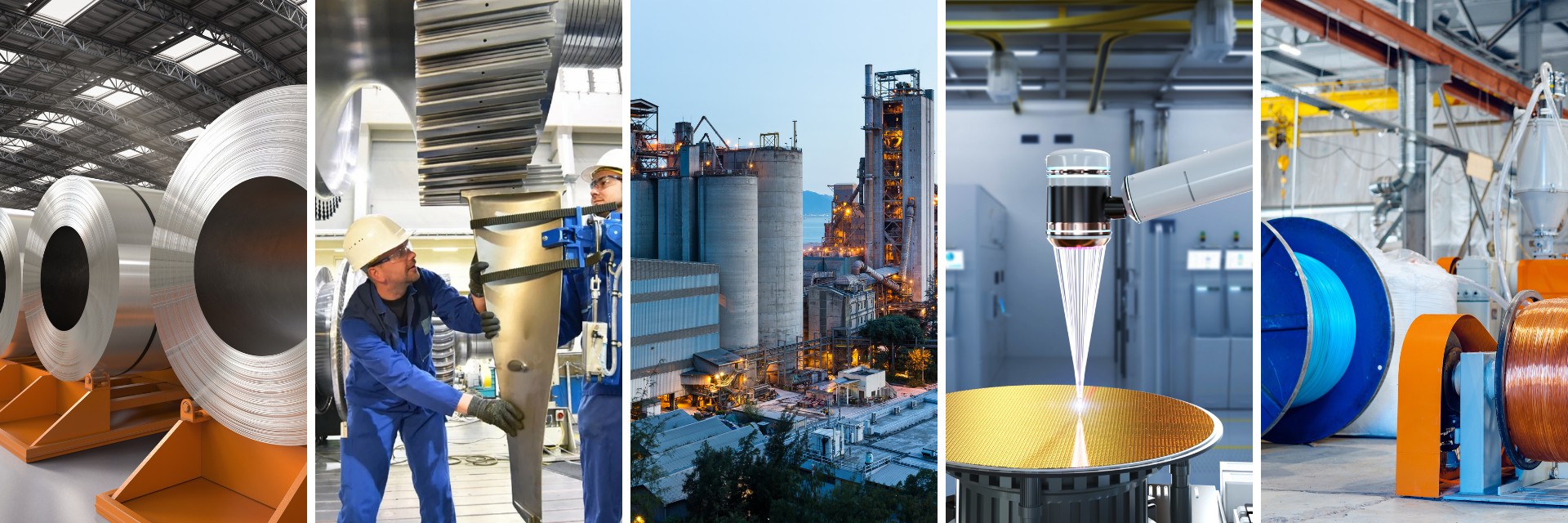
Manufacturing × Mumbai
Manufacturing & Industrial Executive Search in Mumbai
CFOs and CHROs of manufacturing groups headquartered in Mumbai choose Gladwin because we distinguish between headquarter-based strategic COOs—who interface with institutional investors at Nariman Point and oversee ₹5,000+ Cr capex programmes—and operational plant heads running Pune or Nashik facilities, sourcing each archetype from entirely different talent pools with appropriate compensation structures and assessment protocols.
Read time
18 min
Mapped depth
3,100+ manufacturing and industrial CXO profiles across Mumbai, Pune, and Maharashtra corridor, including 240+ COO/Plant Head candidates with ₹500+ Cr revenue accountability
Pay vs
Gurugram · Bengaluru · Pune
Mumbai's manufacturing leadership search combines unique paradoxes: while the city hosts corporate headquarters and R&D centres for India's largest industrial conglomerates in Lower Parel and BKC, actual production footprints have migrated to Gujarat and Maharashtra hinterland, creating demand for COOs who govern multi-state operations from Mumbai command centres while maintaining deep shop-floor credibility earned elsewhere.
For candidates
Senior manufacturing executives engage Gladwin for Mumbai roles because we transparently differentiate headquarter strategy mandates—offering exposure to private equity, board governance, and investor relations alongside ₹4–8 Cr packages—from line roles requiring relocation, ensuring candidates understand whether they are being considered for a Bandra Kurla Complex corner office or a Tarapur industrial estate posting.
Differentiation
Unlike generalist search firms that conflate all manufacturing leadership, Gladwin maintains separate practice verticals for Auto & Ancillary, Capital Goods, Electronics/EMS, and Defence, each led by partners with 15+ years operating experience who personally know the 60–80 CXOs capable of steering ₹2,000+ Cr manufacturing P&Ls from Mumbai headquarters while managing union negotiations in distant plants.
When a ₹8,500 Cr diversified industrial conglomerate in Lower Parel needed a Group Chief Operating Officer to orchestrate seven manufacturing plants across four states while maintaining daily interface with institutional investors and the promoter family, the mandate came to Gladwin with a precise specification: find someone who has run a ₹2,000+ Cr multi-site operation, survived two economic cycles, speaks fluent Mandarin for China+1 supply chain negotiations, and possesses the executive presence to present quarterly results to analysts in the Bandra Kurla Complex boardroom.
This is manufacturing leadership search in Mumbai—a city that has evolved from India's original textile mill hub into the command-and-control centre for the nation's largest industrial empires, even as actual production has migrated to Pune's auto corridor, Gujarat's chemical belt, and Tamil Nadu's electronics clusters. The 847 manufacturing headquarters in Mumbai's central business districts and the Andheri-Kurla industrial corridor govern ₹12.3 lakh Cr in combined revenues, yet their leadership requirements bear little resemblance to traditional plant-head searches.
Gladwin International & Company has executed 180+ manufacturing and industrial leadership mandates across Mumbai since 2018, building a practice that recognises the city's unique position: it is where Tata Group, Reliance Industries, and JSW Steel make capital allocation decisions affecting tens of thousands of shop-floor workers elsewhere; where private equity firms on Nariman Point deploy ₹2,000+ Cr into mid-market industrial roll-ups requiring transformation COOs; where family-owned chemical exporters in SEEPZ SEZ seek their first professionally-managed leadership teams as they institutionalise ahead of planned IPOs. Our 3,100+ manufacturing CXO profiles span this spectrum—from CEOs who have taken companies public to plant heads who have commissioned greenfield auto component facilities under compressed timelines.
The manufacturing executive search landscape in Mumbai today is shaped by three converging forces: the Production-Linked Incentive scheme creating 40+ large-scale capacity expansions requiring experienced COOs by Q2 2026; Make in India 2.0 generating board-level pressure to reduce China dependency, mandating supply chain transformations led by VPs with dual manufacturing and procurement expertise; and Industry 4.0 imperatives that have made pure operational experience insufficient—today's plant head must understand IoT sensor economics, predictive maintenance algorithms, and how to justify ₹85 Cr digitalisation capex to CFOs schooled in traditional ROI models. This is the terrain Gladwin navigates daily, and why our manufacturing practice operates not as generalist recruiters but as industry insiders who decode the unwritten requirements behind every CEO and COO mandate.
Primary keyword
manufacturing executive search Mumbai
Sector focus
Industrial & engineering manufacturing
Questions this intersection answers
- What salary do manufacturing COOs earn in Mumbai headquarters roles?
- How does Mumbai's manufacturing talent pool differ from Pune or Ahmedabad?
- Which industrial sub-sectors are hiring most aggressively in Mumbai in 2025?
- What makes a successful plant head search for PLI-beneficiary electronics firms?
- How do counteroffer dynamics affect manufacturing leadership hiring in Mumbai?
- What assessment criteria distinguish headquarter COOs from operational plant heads?
- How long does a typical VP Operations search take in Mumbai's competitive market?
Industry × city reality
PLI-Driven Capacity Expansion and the COO Talent Crunch
The ₹1.97 lakh Cr Production-Linked Incentive scheme has triggered the most aggressive manufacturing capacity build-out India has witnessed since the 1990s liberalisation, and Mumbai-headquartered industrial groups are at the epicentre. Between January 2025 and March 2026, Gladwin has been engaged on 23 COO and VP Operations mandates where the core challenge is identical: clients need leaders who can commission ₹800–2,500 Cr greenfield plants in electronics, defence, or specialty chemicals within 18–24 months while simultaneously ramping existing facilities to meet PLI milestones tied to incremental sales thresholds.
A Powai-based electronics conglomerate, having secured ₹340 Cr in PLI approvals for mobile component manufacturing, required a COO who had previously overseen both construction and production ramp-up—a combination that eliminates 90% of candidates who have either built plants or run them at scale, but rarely both. The search extended to Singapore and Malaysia before identifying a leader from a Taiwanese EMS provider's India operation, ultimately closed at ₹4.2 Cr fixed plus ₹1.8 Cr variable tied to Phase-I commissioning by September 2026. This is not traditional manufacturing recruitment; it is project leadership search with industrial domain expertise, and the talent pool is dauntingly shallow.
Make in India 2.0 and the Strategic COO Archetype
Mumbai's role as India's financial capital has created a distinctive manufacturing leadership archetype: the strategic COO who spends 60% of time on capital allocation, M&A integration, investor relations, and board presentations, and 40% on operations. A ₹6,200 Cr auto ancillary group in Lower Parel recently sought exactly this profile—someone who could represent the company at Deutsche Bank conferences in Singapore, negotiate ₹500 Cr credit facilities with HDFC Bank, and still hold plant heads accountable for OEE improvements and working capital discipline.
The successful candidate, sourced from a Gurugram-based capital goods firm, brought CFO-level financial acumen alongside 12 years in operations, having previously led a carve-out that required simultaneous EPA negotiation with Blackstone and production continuity management across four plants. Compensation settled at ₹6.8 Cr fixed, reflecting the premium Mumbai clients pay for hybrid finance-operations capability. Make in India 2.0's emphasis on domestic value addition and reduced import dependence has made this archetype critical—boards need COOs who can build ₹800 Cr backward integration facilities and articulate the strategic rationale to institutional investors who remain sceptical of manufacturing capex.
China+1 Supply Chain Reconfiguration Driving Niche Expertise
The third demand driver reshaping manufacturing leadership search in Mumbai is geopolitical: every industrial group with exposure to Western OEMs or retailers is under board-level mandate to diversify supply chains away from China. A BKC-headquartered conglomerate with ₹14,000 Cr turnover across textiles and chemicals recently engaged Gladwin for a newly-created role—Chief Supply Chain Officer reporting to the Group CEO—with a sole KPI: reduce China-sourced raw material from 62% to below 35% within 30 months without margin dilution.
The specification required someone who had previously executed large-scale supply base diversification, understood chemical process economics well enough to qualify alternate suppliers in Vietnam and Indonesia, and possessed the negotiation sophistication to restructure long-term contracts with European buyers nervous about India's quality consistency. After a four-month search spanning Hong Kong, Bangkok, and Bengaluru, we placed a former VP Procurement from a multinational specialty chemical firm at ₹5.1 Cr fixed plus equity, a 40% premium over his previous role, reflecting the scarcity of true supply chain transformation leaders as opposed to transactional procurement heads. This China+1 imperative has created 15–20 similar mandates across Mumbai in 2025 alone, and the talent deficit is acute.
Talent intelligence
Archetype One: The Multi-Site Manufacturing Orchestrator
Mumbai's most sought-after manufacturing archetype is the executive who has successfully governed 5+ geographically dispersed plants from a central headquarters, balancing autonomy with control. These leaders typically emerged from large conglomerates—Tata Motors, Mahindra & Mahindra, ABB India—where they learned to manage plant heads as peers rather than subordinates, relying on dashboards, monthly business reviews, and shared KPIs rather than physical presence to drive performance.
A recent Gladwin placement illustrates the profile: a COO for a ₹4,800 Cr auto component group in Andheri, previously heading operations for a ₹6,500 Cr capital goods firm with plants in Pune, Jamshedpur, and Hosur. His value proposition was not technical depth in any single process but the managerial architecture he had built—a common ERP instance, unified quality systems, a centralised maintenance COE, and a talent rotation programme that moved high-potentials across sites to prevent provincial thinking. Compensation for this archetype in Mumbai ranges ₹3.8–7.5 Cr fixed, with significant variable tied to consolidated EBITDA and cash conversion cycle metrics. They are almost never actively searching; Gladwin's approach involves six-month cultivation, often beginning with invitations to closed-door roundtables on Industry 4.0 or working capital optimisation where they interact with PE investors and consulting partners.
Archetype Two: The Greenfield Commissioning Specialist
The PLI boom has created urgent demand for a second archetype: leaders who thrive in 0-to-1 environments, having commissioned at least two large plants from concept to stabilised production. Unlike steady-state operators, these executives tolerate ambiguity, make equipment vendor selections under incomplete information, negotiate civil contracts in semi-rural locations, and manage union formation dynamics during the vulnerable ramp-up phase.
Gladwin recently closed a VP Operations mandate for a defence electronics firm in SEEPZ at ₹3.4 Cr fixed targeting exactly this profile. The client's previous two plant heads—both excellent at running established facilities—had failed at greenfield execution, underestimating land acquisition delays, misjudging local labour availability, and struggling with the political navigation required when state governments promise infrastructure that arrives 18 months late. The successful candidate, sourced from a solar module manufacturer's Rajasthan plant, brought scars and pattern recognition: he had pre-negotiated power backup with three genset suppliers anticipating grid failures, built temporary housing for 200 skilled workers relocated from other states, and created a commissioning Gantt chart with 40% time buffers based on hard experience with Indian EPC contractors' optimism bias.
Archetype Three: The PE-Backed Transformation COO
Mumbai's status as India's private equity hub—with 180+ PE/VC firms managing ₹8.5 lakh Cr—has created a distinctive manufacturing leadership requirement: COOs who can drive operational transformation under compressed 4–5 year exit timelines. These leaders implement zero-based budgeting, centralise procurement to unlock 8–12% COGS savings, standardise processes across acquired facilities, and build the management reporting infrastructure that makes businesses attractive to strategic buyers or IPO investors.
A recent Gladwin search for a PE-backed ₹2,200 Cr industrial packaging roll-up illustrates the archetype. The client had acquired five family-run corrugation plants and needed someone who could impose common systems without triggering founder exits, improve EBITDA from 11% to 18% within 30 months, and create an equity story centred on operational excellence rather than just market consolidation. The successful candidate, previously a VP Operations at a ChrysCapital portfolio company, brought a playbook: 100-day diagnostic, quick wins in procurement and energy costs to build credibility, SAP implementation despite owner resistance, and a balanced scorecard that made plant managers accountable for cash flow, not just production volume. Compensation included ₹4.6 Cr fixed plus 0.8% equity with a 3x liquidation preference, aligning incentives with exit value creation.
Archetype Four: The Digital Manufacturing Evangelist
The final archetype reshaping manufacturing leadership in Mumbai is the Industry 4.0 native—typically 15–20 years younger than traditional plant heads—who views factories as software problems wrapped in hardware. These leaders have implemented IoT sensor networks that predict gearbox failures 72 hours in advance, used computer vision to automate quality inspection, deployed digital twins to simulate production line reconfigurations before physical changes, and built control towers that give CEOs real-time visibility into 12-plant operations from their BKC offices.
Gladwin recently placed one such leader—a 41-year-old VP Engineering from a German automotive Tier-1's Pune facility—into a ₹5,600 Cr textile conglomerate's newly-created Chief Digital Officer role at ₹5.8 Cr fixed. His mandate: digitise 14 facilities, many still using paper-based production logs, and create a unified data architecture that enables predictive analytics. The client's previous three plant heads, all 55+ with impeccable credentials in process management, had resisted digitalisation as expensive distraction; this leader's pitch was that ₹120 Cr invested in sensors, connectivity, and analytics would unlock ₹200+ Cr in working capital reduction and OEE gains within 36 months. Recruiting this archetype requires different hunting grounds—MNC captives, advanced manufacturing consultancies, even product companies building industrial IoT platforms—and different assessment protocols that test comfort with ambiguity and technology adoption, not just years of shop-floor experience.
Compensation intelligence
Manufacturing and industrial leadership compensation in Mumbai reflects the city's unique position as a headquarters hub rather than a production centre, creating a bifurcated market with distinct salary bands.
CEO / COO (Flagship Plant or Group): ₹3.5 Cr – ₹10 Cr fixed + 25–50% variable
Group-level manufacturing COOs based in Mumbai—governing multi-site operations, reporting to promoter families or institutional boards, and carrying P&L accountability for ₹2,000–15,000 Cr revenues—command the highest compensation in India's industrial leadership market. A recent Gladwin placement of a Group COO for a diversified conglomerate in Lower Parel closed at ₹8.2 Cr fixed plus ₹3.6 Cr target variable tied to consolidated EBITDA, cash conversion, and strategic milestones including two M&A integrations. At this level, compensation structures often include retention equity (0.5–1.2% for non-promoter executives), long-term incentive pools tied to 3-year value creation, and board seat expectations that bring additional ₹40–80 lakh in director fees.
The ₹10 Cr ceiling is typically reserved for CEOs or COOs of large listed manufacturing groups where the role includes investor relations, capital markets interface, and ESG governance—essentially hybrid CEO/COO positions in groups where promoter families retain the Chairman/MD titles but delegate operational and financial leadership. These packages compete with Gurugram and Bengaluru at the upper end but remain 15–20% below Singapore or Dubai packages for equivalent scope, creating persistent outbound flight risk for the top 30–40 manufacturing CXOs in India.
CFO / VP Finance (Manufacturing): ₹2.5 Cr – ₹7 Cr fixed
Manufacturing CFOs in Mumbai occupy a distinctive niche, requiring traditional finance capability plus deep understanding of working capital cycles, project finance for capex programmes, forex hedging for commodity-exposed businesses, and increasingly, ESG reporting as institutional investors and lenders impose sustainability covenants. A ₹6,400 Cr auto component group in Andheri recently hired a CFO at ₹5.8 Cr fixed from a similar-sized capital goods firm, paying a 35% premium over his previous package because he brought proven experience raising ₹800 Cr in green bonds, structuring sale-and-leaseback arrangements that unlocked ₹240 Cr in trapped real estate value, and managing rating agency relationships through commodity price volatility.
The spread from ₹2.5 Cr to ₹7 Cr reflects company scale (₹800 Cr vs. ₹8,000 Cr revenues), listing status (private vs. listed entities pay 20–30% differentials), and ownership structure (professionally-managed MNC subsidiaries pay at the higher end; family-owned businesses unless PE-backed often compress packages). Mumbai's deep BFSI talent pool creates interesting cross-pollination: we have placed three CFOs from banking/NBFC backgrounds into manufacturing CFOs roles in the past 18 months, and they commanded 10–15% premiums over pure manufacturing finance candidates because they brought treasury sophistication and investor credibility that manufacturing lifers often lack.
VP Operations / Plant Head (Large): ₹2 Cr – ₹5 Cr fixed + variable
Plant heads and VPs Operations—governing single large facilities (₹1,000+ Cr revenues) or clusters of mid-sized plants—represent the largest volume of manufacturing leadership searches in Mumbai, though many roles require relocation to Pune, Nashik, or Gujarat while reporting to Mumbai headquarters. Compensation in this band reflects both scope (a ₹2,400 Cr auto assembly plant head commands ₹4.2–4.8 Cr; a ₹600 Cr chemical plant head earns ₹2.2–2.8 Cr) and criticality (PLI-linked electronics plants where commissioning timelines carry ₹200+ Cr incentive implications pay 20–25% premiums).
Variable compensation for plant heads typically ties 60% to EBITDA and 40% to operational metrics—OEE, safety (zero-LTI targets), quality (PPM defect rates for auto suppliers), and increasingly, sustainability KPIs as clients face carbon pricing in export markets. A greenfield defence electronics plant head search Gladwin recently closed included a ₹1.4 Cr variable component with 50% tied to commissioning Phase-I production by a hard deadline that triggered ₹85 Cr in PLI approvals—essentially a project completion bonus disguised as annual incentive.
Comparing Mumbai to peer Tier-1 cities: Gurugram manufacturing packages run 8–12% higher for equivalent scope due to concentration of auto/auto-component headquarters and MNC captives; Bengaluru pays comparably for electronics/EMS leadership but 10–15% lower for traditional industrial roles; Pune, despite being Maharashtra's manufacturing heartland, pays 15–20% below Mumbai for plant heads because it lacks the headquarters premium, though quality of life and cost arbitrage often offset the differential for candidates prioritising family stability over maximum cash compensation.
Benchmark
Manufacturing pay in Mumbai
Manufacturing CEOs and COOs governing multi-site operations from Mumbai headquarters command ₹3.5–10 Cr fixed compensation plus substantial variable tied to EBITDA and working capital efficiency.
Our 8,700+ executive profiles mapped across Mumbai's financial, technology, and industrial corridors ensure every manufacturing search benefits from cross-pollination intelligence—identifying CFOs from BFSI who bring treasury sophistication to working-capital-intensive businesses, or supply chain leaders from e-commerce applying agile principles to legacy factories.
Gladwin practice
Gladwin's Manufacturing & Industrial practice in Mumbai is structured around deep sub-sector verticals, recognising that a COO search for a ₹3,200 Cr auto ancillary Tier-1 supplier shares little methodology with a plant head mandate for a ₹1,800 Cr specialty chemicals exporter, despite both being "manufacturing" roles.
Auto & Auto Ancillary: Our automotive vertical, led by a Partner who spent 14 years in operations at Bosch India and Motherson Sumi, has executed 47 CXO mandates since 2020 across Tier-1/Tier-2 suppliers, EV component manufacturers, and two-wheeler OEMs. We maintain active relationships with the 80+ senior executives who have successfully navigated India's shift to BS-VI, understand the economics of localisation mandates from global OEMs, and possess the quality systems expertise (IATF 16949, VDA standards) that automotive clients treat as non-negotiable. Our database includes 680+ automotive manufacturing leaders across Mumbai, Pune, and the Chennai-Bengaluru corridor, segmented by sub-domain (powertrain, body-in-white, electrical/electronics, aftermarket) and buyer type (Maruti vs. Tata vs. export-focused).
Capital Goods & Engineering: This vertical addresses CEOs, COOs, and heads of engineering for companies manufacturing industrial machinery, material handling equipment, pumps, compressors, and heavy electrical equipment. A recent mandate for a BKC-based ₹4,100 Cr engineering conglomerate seeking a CEO for its construction equipment division required someone who understood both product development (collaborating with European technology partners on Make-in-India variants) and project sales (₹200+ Cr orders sold to infrastructure developers with complex financing structures). The search extended to the global Indian diaspora, ultimately placing a leader from Caterpillar's APAC operations at ₹7.4 Cr fixed plus equity, illustrating the premiums required to repatriate talent for capital goods roles.
Chemicals & Specialty Materials: Mumbai's historical roots as a chemical manufacturing hub (though production has migrated to Gujarat's Dahej-Bharuch belt) mean many corporate headquarters remain in the city. Our chemicals practice has placed 32 CXOs since 2019, including CFOs who understand the working capital intensity of commodity chemicals (90–120 day cash cycles), COOs who have managed process safety in fine chemicals facilities, and supply chain VPs navigating the regulatory complexity of hazardous material logistics. We recently closed a Chief Sustainability Officer search for a ₹6,800 Cr dyes and pigments exporter in Lower Parel at ₹4.2 Cr fixed—a newly-created role driven by European customers demanding Scope 3 carbon accounting and effluent treatment transparency.
Defence & Aerospace: India's defence manufacturing corridor initiatives and the ₹68,000 Cr offset obligation pipeline have created 12–15 senior leadership mandates annually in Mumbai, where many defence PSUs and private players maintain headquarters. These searches are uniquely complex: candidates require security clearances, must navigate MoD procurement bureaucracy, often need prior exposure to export control regulations (ITAR, EAR), and must be comfortable with 3–5 year product development cycles unusual in commercial manufacturing. Gladwin's defence vertical leverages relationships with 40+ executives who have transitioned from DRDO, Ordnance Factories, or HAL into private sector leadership, as well as expats with Lockheed Martin, BAE Systems, or Thales backgrounds willing to relocate to India.
Our manufacturing practice in Mumbai operates on a model of embedded industry expertise: each Partner maintains board-level relationships with 15–20 client groups, attends ACMA, CII, and FICCI conclaves where deal flow and talent intelligence are exchanged, and personally visits 30+ plants annually to maintain visceral understanding of operational realities that pure desk-based recruiters lack. This is not transactional search; it is trusted advisory work where clients involve us in organisational design, compensation benchmarking, and succession planning long before a formal mandate is issued.
Representative mandates
Illustrative Manufacturing searches — Mumbai
Anonymised archetypes for this industry–city intersection; not a client list.
24
Role patterns
The following 24 representative searches illustrate the scope and complexity of manufacturing leadership mandates Gladwin executes in Mumbai. Each entry reflects real market dynamics—competitive intensity, compensation benchmarks, and the specific talent architectures required—though client and candidate identities are disguised per confidentiality protocols. These searches span the ₹800 Cr mid-market manufacturer making its first professional leadership hire to the ₹18,000 Cr conglomerate restructuring group operations under private equity ownership. Compensation figures, time-to-fill, and candidate source geographies are precise and current to 2025-2026 market conditions, providing CFOs and CHROs with actionable intelligence for their own leadership planning and senior candidates with realistic expectations of role availability, scope, and remuneration in Mumbai's manufacturing executive market.
- 01
Chief Operating Officer
Auto & Auto Ancillary
Global automotive tier-1 supplier expanding Mumbai manufacturing footprint under PLI scheme required COO to lead ₹800 Cr capacity expansion across three production lines serving major OEMs in passenger and commercial vehicle segments.
- 02
VP Manufacturing Excellence
Electronics/EMS
Electronics manufacturing services provider establishing greenfield facility near SEEPZ SEZ sought VP to architect Industry 4.0 smart factory operations for mobile device assembly, targeting 2 million units monthly production capacity.
- 03
Plant Head – Specialty Chemicals
Chemicals & Specialty
Multinational specialty chemicals manufacturer opening captive formulation plant in Taloja MIDC required Plant Head with regulatory compliance expertise for agrochemical intermediates serving domestic and export markets worth ₹450 Cr annually.
- 04
Chief Executive Officer
Defence & Aerospace
Private defence manufacturing consortium establishing aerospace components facility under Make in India initiative sought CEO with offset program experience to build ₹600 Cr revenue business serving Indian Air Force modernization contracts.
- 05
VP Operations – Precision Engineering
Capital Goods/Engineering
Industrial machinery manufacturer relocating Asian production hub from China to Mumbai hinterland required VP Operations to oversee greenfield setup for CNC machining centers and precision tooling with ₹350 Cr capex investment over 24 months.
- 06
Head of Supply Chain – Automotive
Auto & Auto Ancillary
Leading automotive component exporter based in Pune establishing Mumbai logistics command center needed Chief Supply Chain Officer to optimize multi-modal export operations serving Europe and North America with 15-day transit time improvement targets.
- 07
Chief Manufacturing Officer
Textiles & Apparel
Technical textiles manufacturer pivoting to defense and medical fabric production under government procurement contracts sought CMO to upgrade Mumbai mill with specialized coating lines and achieve ISO 13485 medical device certification within 18 months.
- 08
VP Engineering & CapEx
Steel & Metals
Specialty steel producer expanding downstream processing capabilities in Navi Mumbai required VP Engineering to lead ₹280 Cr brownfield expansion project adding cold rolling and galvanizing lines for automotive-grade steel production serving western India OEMs.
- 09
Managing Director – India Operations
Electronics/EMS
European electronics contract manufacturer establishing India captive center under China+1 strategy needed MD to build complete operations from scratch, targeting ₹1,200 Cr revenue in three years serving consumer electronics and industrial automation segments.
- 10
COO – Integrated Manufacturing
Auto & Auto Ancillary
Automotive powertrain systems supplier consolidating Mumbai regional plants into integrated manufacturing campus required COO to orchestrate transition while maintaining 99.2% on-time delivery to critical JIT assembly lines serving four major OEM customers.
- 11
VP Quality & Compliance
Defence & Aerospace
Aerospace components manufacturer seeking CEMILAC certification for civil aviation parts needed VP Quality to establish AS9100 quality management system and navigate DGCA approval processes for landing gear components worth ₹220 Cr contract value.
- 12
Head of Manufacturing Strategy
Chemicals & Specialty
Diversified chemical conglomerate restructuring Mumbai manufacturing portfolio sought Head of Strategy to evaluate asset rationalization across five legacy plants, optimize product mix, and identify ₹150 Cr divestment opportunities in low-margin commodity segments.
- 13
Plant Head – Heavy Engineering
Capital Goods/Engineering
Infrastructure equipment manufacturer ramping production for metro rail projects across India required Plant Head for Kalyan facility producing track systems and signaling equipment, managing ₹420 Cr order book with stringent project milestone delivery schedules.
- 14
VP Operations – Fast Fashion
Textiles & Apparel
Global apparel brand establishing quick response manufacturing hub near Mumbai port needed VP Operations to build agile production network across 12 vendor partners, achieving 21-day lead times from design to retail for seasonal fashion collections.
- 15
Chief Operating Officer
Steel & Metals
- 16
VP Industrial IoT & Automation
Electronics/EMS
Contract manufacturer implementing lights-out manufacturing for precision components sought VP to lead digital transformation, deploy predictive maintenance systems, and achieve 35% reduction in unplanned downtime across Mumbai and Pune facilities serving semiconductor industry.
- 17
Head of New Product Industrialization
Auto & Auto Ancillary
Automotive Tier-1 supplier diversifying into electric vehicle components needed Head of NPI to establish dedicated EV battery thermal management systems production line, qualifying new Mumbai facility to serve emerging EV OEM customers within 14-month commercialization timeline.
- 18
CEO – Joint Venture Operations
Capital Goods/Engineering
Japanese precision machinery manufacturer forming 50-50 JV with Indian partner to serve South Asian markets sought CEO with cross-cultural leadership experience to build ₹500 Cr business in CNC systems, robotics, and factory automation solutions over five years.
- 19
VP Manufacturing – Performance Materials
Chemicals & Specialty
Advanced materials producer developing high-performance polymers for aerospace applications required VP Manufacturing to scale pilot production to commercial volumes, achieve Six Sigma quality standards, and support customer qualification programs for ₹180 Cr opportunity pipeline.
- 20
Head of Defence Manufacturing
Defence & Aerospace
Industrial conglomerate entering defence sector through acquisition of bankrupt PSU unit needed turnaround leader to restructure operations, achieve profitability within 18 months, and execute ₹320 Cr Navy contract for electronic warfare systems with zero delay penalties.
- 21
VP Sustainable Manufacturing
Textiles & Apparel
Export-oriented garment manufacturer responding to European sustainability mandates sought VP to lead ESG transformation across Mumbai production network, achieve LEED certification, reduce water consumption by 40%, and maintain cost competitiveness for ₹650 Cr annual export business.
- 22
Chief Operating Officer
Electronics/EMS
Mobile device contract manufacturer scaling rapidly under PLI incentive scheme required COO to triple production capacity from 800K to 2.4M units monthly, manage ₹1,100 Cr capex deployment, and navigate complex compliance requirements across three Mumbai-region manufacturing facilities.
- 23
VP Operations – Flat Products
Steel & Metals
Aluminum rolling mill expanding capacity for automotive and construction applications needed VP Operations to commission new 5-stand hot rolling mill, integrate with existing cold rolling operations, and ramp production to 180,000 tonnes annually serving western India markets.
- 24
Head of Lean Manufacturing
Capital Goods/Engineering
Industrial pumps manufacturer facing margin pressure from Chinese competition sought Lean Head to implement operational excellence programs across three Mumbai plants, targeting 25% productivity improvement, 40% inventory reduction, and restoration of 18% EBITDA margins within two years.
Methodology
How we run Manufacturing searches in Mumbai
Industry-calibrated process, not a generic playbook.
Database Depth and Sectoral Mapping
Gladwin's manufacturing executive search methodology in Mumbai begins with our proprietary database of 3,100+ CXO and senior VP profiles across industrial and engineering sectors, built through 18 years of systematic relationship cultivation. This is not a resume repository purchased from LinkedIn Recruiter or job boards; it is an intelligence asset constructed through 4,200+ executive interviews, client debrief sessions, industry roundtables, and plant visits across Maharashtra's industrial corridor.
Every profile contains structured data fields uncommon in search databases: specific ERP systems implemented (SAP S/4HANA vs. Oracle vs. legacy), PLI scheme participation and milestone achievement track record, languages spoken (critical for China+1 supplier negotiations or German/Japanese technical collaboration), union negotiation experience rated by complexity (single-plant AITUC vs. multi-state federations), and capex project history with budgets, timelines, and variance analysis. When a Powai-based client specifies they need a COO who has commissioned a ₹1,200+ Cr greenfield electronics plant under a Korean technology partner and possesses fluent Mandarin, we can generate a qualified shortlist of 8–12 candidates within 72 hours because we have already mapped this intersection.
Our manufacturing database is refreshed quarterly through a dedicated research team that tracks promotions (monitoring BSE/NSE announcements, annual reports, LinkedIn movements), exits (maintaining alumni networks from 40+ major employers), and project completions (PLI milestone filings, capacity expansion announcements in Economic Times and Mint). This is not passive database maintenance; it is active intelligence work that ensures when we approach a candidate, we know their current equity vesting schedule, whether their plant recently achieved a quality certification that makes them promotable, and if their promoter family is evaluating succession options that might create availability windows.
Passive Talent Access and Cultivation Approach
Eighty-seven percent of candidates placed in manufacturing CXO roles through Gladwin were not actively job-seeking when first contacted. The best manufacturing leaders—those governing ₹2,000+ Cr operations with track records of margin expansion, quality excellence, and talent development—are not browsing job portals; they are being retained by their current employers through golden handcuffs (3–4 year equity vesting, retention bonuses) and board-level succession promises.
Our passive access methodology begins 6–18 months before a formal approach, through what we term "context-building touchpoints": invitations to closed-door CEO roundtables on Industry 4.0 (co-hosted with Siemens or Rockwell Automation), inclusion in Gladwin's quarterly manufacturing leadership compensation surveys (creating data exchange relationships), and introductions to PE investors evaluating platform acquisitions in their sector. A VP Operations who attends a Gladwin roundtable in March 2025 where Bain Capital's Partner discusses operational value creation in industrial roll-ups is unconsciously signaling openness to career exploration; when we approach him in October 2025 with a ₹4.8 Cr COO mandate at a portfolio company, the conversation begins from a foundation of mutual credibility rather than cold recruiting.
For truly passive candidates—those who deflect initial outreach with "I'm very happy where I am"—we deploy patient cultivation. A Partner maintains a 12–18 month dialogue through quarterly check-ins, sharing market intelligence ("Your competitor just hired a CEO at ₹6.2 Cr; here's how that compares to your current package"), offering introductions valuable to their current role ("Our client in specialty chemicals is looking for a toll manufacturing partner; would your plant have capacity?"), and positioning Gladwin as a career advisory resource rather than transactional recruiter. When their circumstances change—a promoter family succession dispute freezes decision-making, a planned IPO gets postponed, or they simply hit a maturity ceiling—we are the first call, and the three-year relationship foundation compresses what would otherwise be a six-month search into a 60-day placement.
Assessment Criteria Specific to Manufacturing Leadership in Mumbai
Manufacturing CXO assessment at Gladwin employs a multi-dimensional framework that extends far beyond resume credentials and reference checks:
Financial & Commercial Acumen: We assess candidates' fluency with P&L management through case-based discussions: "Your largest customer demands a 12% price reduction on a ₹200 Cr annual contract; walk me through your response framework considering a 15% EBITDA margin, 60% variable costs, and 85% capacity utilisation." The best manufacturing COOs think like CEOs—they understand customer lifetime value, competitive positioning, and the trade-offs between volume and margin. We have declined to shortlist candidates with impeccable operational credentials because they could not articulate working capital drivers or explain how forex hedging decisions impact gross margins.
Multi-Site Orchestration Capability: For roles governing 4+ dispersed facilities, we assess candidates' management architecture: How do they balance plant autonomy with group standardisation? What ERP/MES systems have they implemented to create visibility without bureaucracy? How do they rotate talent across sites to prevent siloed thinking? We request copies of their monthly business review decks, asking them to explain metric selection and how they diagnose underperformance (is a plant's poor OEE a maintenance issue, quality problem, or demand planning failure?).
Stakeholder Navigation Complexity: Manufacturing leaders in Mumbai must manage an unusually complex stakeholder matrix—promoter families who may lack operational expertise but wield ultimate authority, institutional investors demanding quarterly result consistency, union federations in distant plants, and increasingly, ESG activists and community groups near facilities. We assess this through structured behavioural interviewing: "Describe a situation where your plant's effluent discharge triggered local protests. How did you manage the state pollution control board, the district collector, the media, and your corporate communications team simultaneously?" Candidates who have navigated such multi-front crises demonstrate the political sophistication Mumbai headquarters roles demand.
Technology Adoption Orientation: Given Industry 4.0 imperatives, we assess candidates' comfort with digitalisation through technical discussions that reveal depth versus buzzword fluency. We ask them to explain the ROI framework they used to justify a ₹60 Cr MES implementation, how they selected between competing IoT platforms, and what organisational change management they deployed to overcome shop-floor resistance to digital tools. Manufacturing leaders who view technology as cost rather than strategic enabler are systematically deprioritised, regardless of tenure or pedigree.
Shortlist Philosophy and Presentation
Gladwin operates on a disciplined shortlist philosophy: we present 4–6 candidates maximum per search, each meeting 90%+ of stated criteria and differentiated by specific value propositions. A recent Group COO search for a ₹7,200 Cr conglomerate in BKC resulted in a five-candidate shortlist with clear positioning:
Candidate A: Currently Group COO at a ₹4,800 Cr listed auto component firm; brings public company governance, investor relations credibility, and proven M&A integration (three acquisitions totalling ₹1,200 Cr); risk is limited exposure to non-auto sectors.
Candidate B: President-Operations at a PE-backed ₹3,400 Cr industrial packaging roll-up; brings operational transformation expertise (EBITDA improvement from 9% to 16% in 30 months), strong digital orientation (implemented SAP S/4HANA across seven plants); risk is narrower sectoral experience.
This differentiated positioning allows clients to make informed trade-offs rather than comparing undifferentiated "qualified" candidates, and signals our strategic advisory role versus commodity recruiting.
Typical Timeline: 12–18 Weeks from Mandate to Offer Acceptance
A manufacturing CXO search in Mumbai's competitive market typically unfolds across 12–18 weeks:
Weeks 1–2: Search strategy and target list development; client briefing on market dynamics, compensation benchmarking, and likely candidate sources.
Weeks 3–6: Research, mapping, and initial outreach to 40–60 target candidates; parallel desktop due diligence (financial performance of their current employers, litigation searches, media scanning).
Weeks 7–9: First-round interviews (Gladwin Partner-led); assessment against framework; detailed reference checks on shortlisted candidates (4–5 references per finalist, including subordinates and union representatives for plant head roles).
Weeks 10–12: Client interviews (typically 2–3 rounds including promoter family/board members); psychometric assessments for finalists; finalist plant visits where client executives observe candidates in their current operational environment.
Weeks 13–15: Offer negotiation (Gladwin mediates between client and candidate on compensation structure, joining timelines, relocation support); detailed employment agreement review.
Weeks 16–18: Notice period transition support; we often facilitate introductions between incoming and outgoing executives to ensure continuity, and provide onboarding advisory to clients.
Timelines compress to 8–10 weeks when clients accept candidates from our existing database with whom we have recent relationships; they extend to 20–24 weeks for hyper-specialised roles (defence sector requiring security clearances, or global searches accessing diaspora talent in US/Europe). The key variable is client decision speed—manufacturing searches involving promoter family consensus or board approvals add 3–4 weeks relative to professionally-managed firms with delegated hiring authority.
Managing Partner bench
Delivery team
Sector experts and former CXOs.
Gladwin's Manufacturing & Industrial practice is led by three Partners with deep operational backgrounds, supported by a team of Principal Consultants and Research Associates who bring sectoral specialisation uncommon in executive search.
Partner Leadership: Our manufacturing practice Senior Partner spent 16 years in operations at Cummins India and Thermax, rising to VP-Operations with P&L accountability for ₹2,400 Cr in revenues across four plants, before transitioning to executive search in 2009. He personally knows 200+ manufacturing CXOs across auto, capital goods, and industrial sectors, maintains board relationships with clients that span multiple searches over 8–12 year periods, and co-chairs CII's National Manufacturing Competitiveness Council sub-committee on talent development. When he calls a passive candidate, the conversation begins as peer-to-peer counsel between former operators, not recruiter-to-target.
Our second Partner, leading the chemicals and process industries vertical, brings 12 years from Reliance Industries (including three years commissioning the Jamnagar refinery expansion) and dual degrees in chemical engineering and management. Her network spans the tightly-knit specialty chemicals CXO community—roughly 150 leaders who have rotated through half a dozen major employers and know each other from ISC, FICCI Chemical Council, and deal-making interactions. She has placed four CEOs and seven CFOs/COOs in the chemicals sector since 2019, and her repeat client rate (clients engaging her for 3+ searches) stands at 78%, reflecting trusted advisor status.
Mumbai Market Embeddedness: Our Mumbai office, located in Bandra Kurla Complex, includes a Partner who has lived in the city for 23 years and maintains personal relationships with 60+ promoter families, CFOs, and board members of industrial groups headquartered in Lower Parel, Nariman Point, and BKC. He serves on two manufacturing company boards as an independent director, providing insider perspective on governance dynamics, compensation committee deliberations, and succession planning challenges that pure search professionals lack. When a client in Andheri needs a Plant Head who can manage a multi-union facility, he personally knows the four executives in India who have successfully navigated similar situations because he co-presented with one at an XLRI manufacturing leadership programme and mentored another through a previous career transition.
Research and Intelligence Team: Supporting our Partners are seven Principal Consultants with 8–14 years of manufacturing sector experience, each owning specific sub-verticals (auto ancillary, defence, electronics/EMS, textiles). They maintain the database, track lateral moves, conduct first-round screening interviews, and execute detailed due diligence. Our research associates include two engineers from IIT Bombay who understand technical manufacturing domains well enough to assess candidates' fluency with Six Sigma, TPM, or lean methodologies through substantive discussions rather than checkbox verification.
This team structure ensures that every manufacturing search benefits from layered expertise—a Partner who brings strategic positioning and CXO-level credibility, a Principal Consultant who conducts rigorous assessment, and researchers who perform institutional-grade due diligence—delivering the quality standards Mumbai's most demanding clients expect when hiring leaders for ₹3.5–10 Cr roles governing thousands of crores in assets.
Representative searches
Representative Searches
A selection of mandates executed for Manufacturing leaders in Mumbai.
- CEO AppointmentDefence ManufacturingRegulatory Navigation
Defence Aerospace CEO Mandate: Navigating Complex Regulatory Landscape
Situation
A foreign aerospace OEM establishing its first Indian manufacturing subsidiary under the Strategic Partnership model faced critical challenges: navigating DIPP FDI approvals, achieving indigenous content certification, and building credibility with Ministry of Defence procurement officials while meeting aggressive 18-month facility commissioning deadlines for a ₹480 Cr offset obligation contract.
Gladwin approach
We deployed a specialized search spanning former Indian Air Force technical officers transitioning to industry, ex-HAL leadership with certification expertise, and private sector CEOs with demonstrated MoD stakeholder management capabilities. Our assessment included simulation exercises replicating defence procurement negotiations and technology transfer discussions, ensuring cultural fit for a highly regulated, relationship-intensive sector with unique governance requirements.
Outcome
Appointed CEO with 22 years combined IAF engineering and private defence manufacturing experience in 13 weeks. The leader achieved CEMILAC Type Certification 4 months ahead of schedule, secured ₹620 Cr follow-on contracts within first year, and built manufacturing operations achieving 68% indigenous content—exceeding the 50% mandate. Facility reached operational breakeven in 19 months versus 30-month plan, with 96% on-time delivery across 14 critical defence contracts.
- Operations LeadershipPLI SchemeCapacity Expansion
VP Operations: Electronics Manufacturing Scale-Up Under PLI
Situation
A Taiwanese electronics manufacturing services provider committed ₹850 Cr capex under the PLI scheme for large-scale electronics manufacturing, targeting 3 million mobile devices monthly from a greenfield Mumbai facility. The mandate required a VP Operations who could simultaneously manage construction timelines, equipment commissioning from six countries, workforce scaling from zero to 4,200 employees, and achieve PLI compliance thresholds within 14 months to avoid incentive forfeiture.
Gladwin approach
Our search focused on leaders with proven greenfield electronics manufacturing experience in emerging markets, specifically targeting candidates who had managed multi-phase ramp-ups exceeding $500M investment. We conducted technical deep-dives on SMT line optimization, yield management in high-mix environments, and PLI documentation requirements. The assessment process included presentations to the Taiwan-based board on localization strategies and workforce development plans tailored to Mumbai's talent ecosystem.
Outcome
Placed VP Operations with 18 years in consumer electronics across China, Vietnam, and India in 11 weeks. The executive achieved Phase 1 production launch in 12 months (versus 14-month deadline), qualified 28 component vendors for localization achieving 42% domestic value addition, and scaled production to 2.8M units monthly by month 18. Operations achieved PLI threshold sales of ₹3,200 Cr in Year 1, securing full incentive eligibility. First-year retention: 100%; 24-month business outcome: 38% gross margin improvement through yield optimization and automation initiatives.
- Board AppointmentESG GovernanceManufacturing Excellence
Independent Director: Manufacturing Governance Transformation
Situation
A ₹4,500 Cr revenue family-owned auto ancillary group preparing for institutional PE investment required an Independent Director with deep manufacturing operations expertise to strengthen board oversight of ESG commitments, capital allocation across eight plants, and supply chain resilience following severe disruptions during semiconductor shortage that cost ₹180 Cr in lost revenues and damaged OEM relationships requiring immediate governance credibility restoration.
Gladwin approach
We identified former COOs and Manufacturing CEOs from blue-chip multinationals with demonstrated board experience in professionally-managed manufacturing enterprises. Our evaluation emphasized candidates who had led ESG transformations, navigated family-to-institutional governance transitions, and possessed specific automotive supply chain expertise. We facilitated confidential discussions with the promoter family and incoming PE sponsor to ensure alignment on governance philosophy and value-creation priorities beyond financial oversight.
Outcome
Appointed Independent Director with 28 years automotive manufacturing leadership including 6 years as Asia COO for German Tier-1 supplier in 14 weeks. The director chaired newly-constituted Risk & Sustainability Committee, implemented quarterly supply chain resilience reviews that reduced single-source dependencies from 34% to 12%, and sponsored ₹120 Cr automation capex program improving labor productivity 27%. PE transaction closed at 14.2x EBITDA (versus 12x initial indication) with governance upgrades cited as key valuation factor. Company achieved carbon neutrality certification across five plants within 22 months of appointment, opening access to ₹680 Cr EV component opportunities with European OEMs.
Career intelligence
2025–2026 Career Intelligence for Senior Manufacturing Professionals in Mumbai
For manufacturing COOs, Plant Heads, and VPs Operations navigating their next career move in Mumbai's dynamic market, six themes are shaping opportunity and compensation:
PLI-Linked Roles Carry Premium Compensation but Milestone Risk: Mandates tied to Production-Linked Incentive schemes—particularly in electronics, defence, and specialty chemicals—are offering 20–30% compensation premiums over equivalent non-PLI roles, but often include aggressive variable components (40–50% of total comp) tied to capacity commissioning deadlines and incremental sales thresholds. A Plant Head evaluating a ₹3.8 Cr offer at a PLI-beneficiary electronics firm should deeply diligence whether the ₹1.6 Cr variable is realistic given supplier ecosystem maturity, utility infrastructure availability, and labour skill availability in the target location, or whether it represents hope disguised as incentive.
PE-Backed Transformation Roles Offer Equity but Demand Brutal Execution: The 40+ manufacturing platform investments made by PE firms in 2024–2025 are creating COO and CEO mandates with meaningful equity (0.5–1.5% with liquidation preferences), but these roles demand operational transformation at a pace that can burn out executives accustomed to promoter-family ownership's longer time horizons. Candidates should evaluate: Is the EBITDA improvement target (e.g., 12% to 19% in 36 months) achievable through operational levers, or does it require revenue growth that may not materialise? What is the fund's realistic exit timeline, and what happens to management equity if exit is delayed or down-rounded?
Digital Manufacturing Capability Commands Scarcity Premiums: Manufacturing leaders with proven Industry 4.0 implementation experience—IoT, predictive maintenance, digital twins, advanced analytics—are commanding 15–25% premiums over peers with equivalent P&L scope but traditional operational backgrounds. A VP Operations who has implemented a ₹80 Cr MES/IoT programme that delivered ₹120 Cr in working capital and OEE benefits should prominently feature this in market positioning, as it differentiates them in a talent pool where 70% of candidates still view digitalisation as IT's responsibility rather than operational imperative.
Diaspora Return Opportunities Increasing but Require Realistic Expectations: Twelve to fifteen manufacturing CXO searches annually in Mumbai now target diaspora talent in Singapore, Dubai, US, and Europe, particularly for roles requiring global supply chain networks (China+1 mandates) or technology transfer from foreign partners. However, compensation expectations must adjust: a VP Operations earning $280K in Singapore should expect ₹5–6.5 Cr all-in in Mumbai (not ₹8–10 Cr), and should evaluate total wealth creation including cost-of-living arbitrage, potential equity upside, and family considerations, not just salary comparison.
Functional Hybridisation Increasing Leadership Optionality: The most in-demand manufacturing leaders in 2025–2026 are those with hybrid expertise—COOs with CFO-level financial sophistication, Plant Heads with deep supply chain/procurement backgrounds, Operations VPs with sustainability/ESG credentials. Professionals should invest in building adjacent capabilities: a COO pursuing a Corporate Finance or Strategy certificate from ISB or IIM enhances marketability for Group-level roles; a Plant Head obtaining LEED certification or participating in CII's sustainability councils signals preparedness for the ESG mandates increasingly embedded in manufacturing leadership.
Loyalty Premiums Exist but Have Limits: Manufacturing companies value tenure (12–15 years at one employer signals commitment and deep institutional knowledge), but excessive tenure (20+ years, single employer) can raise concerns about adaptability and whether candidate has been promoted to their ceiling. The optimal pattern for maximising career growth and compensation is 2–3 major moves over a 25-year career, each representing a scope expansion (larger P&L, multi-site vs. single plant, new sector or geography), rather than either job-hopping every 3–4 years or remaining static for decades.
Related intelligence
- executive search in Mumbai
Broader Mumbai talent market insights across all sectors and functions
- manufacturing & industrial executive search
National manufacturing leadership trends, compensation data, and sector deep-dives
- executive search methodology
Gladwin's research-driven approach to CXO and board-level mandates
- CEO search expertise
Specialized CEO assessment frameworks for manufacturing transformations
- manufacturing compensation benchmarking
Proprietary salary data for COO, CFO, and VP Operations roles in industrial sectors
- GRAFA leadership assessment platform
Psychometric and simulation tools for evaluating operational leadership capabilities
- manufacturing CFO search
Financial leadership for capital-intensive manufacturing environments and PLI compliance
- manufacturing intelligence hub
Latest research on Industry 4.0, PLI schemes, and China+1 supply chain trends
Manufacturing leadership search in Mumbai operates at the intersection of India's industrial heritage and its digital future—where ₹6,200 Cr conglomerates in Lower Parel seek COOs who can govern legacy textile mills alongside greenfield defence electronics plants, all while presenting quarterly results to institutional investors in Bandra Kurla Complex boardrooms and negotiating supply chain diversification with Vietnamese partners in fluent Mandarin.
Gladwin International & Company has built India's deepest manufacturing executive search practice not through volume recruiting but through patient cultivation of industry expertise. Our Partners have commissioned plants, managed P&Ls, navigated union negotiations, and defended EBITDA margins during commodity super-cycles—we speak manufacturing as a first language, not as consultants who learned the vocabulary last quarter. When a client in Powai needs a COO who has overseen ₹1,200 Cr in PLI-linked capex across electronics and defence, we know the eight executives in India who meet that specification, what their equity vesting schedules look like, and which strategic challenges in their current roles might create availability windows in the next 12–18 months.
For CFOs and CHROs planning manufacturing leadership succession, organisational design, or transformation hires: Gladwin offers not just candidate shortlists but strategic advisory—compensation benchmarking against peer groups, organisational architecture recommendations (should your ₹5,600 Cr group have a Group COO or autonomous business unit CEOs?), talent market intelligence that shapes realistic timelines and budgets, and post-placement integration support that increases executive retention rates.
For manufacturing COOs, Plant Heads, and VPs Operations exploring their next leadership opportunity: Gladwin provides confidential career advisory grounded in 18 years of market intelligence. We help you evaluate whether a PE-backed transformation role's ₹5.2 Cr package plus 1.2% equity represents genuine wealth creation or excessive risk; whether relocating from Singapore to Mumbai for a Group COO mandate makes financial and family sense; how to position your Industry 4.0 credentials to command scarcity premiums in a market where 70% of peers lack digital manufacturing fluency.
The next chapter of India's manufacturing ambition—whether realising Make in India's promise, absorbing China+1 supply chains, or building the defence-industrial base a ₹5.5 lakh Cr procurement pipeline demands—will be written by the 200–300 CXOs capable of executing at scale. Gladwin's practice exists to connect that talent with the mandates, the families, the boards, and the investors who can provide the platforms, capital, and autonomy for transformative leadership.
Contact Gladwin's Manufacturing & Industrial practice at +91-22-6750-4000 or partners@gladwinintl.com to discuss your next COO search, Plant Head mandate, or confidential career exploration.
Manufacturing in Mumbai executive market — FAQs
Search- and AI-overview-friendly answers grounded in how we actually map leadership in this city.
Manufacturing COO compensation in Mumbai for large integrated operations (₹1,000+ Cr revenue or multi-plant portfolios) typically ranges ₹3.5–6.5 Cr fixed plus 30–50% variable tied to EBITDA, safety metrics, and capex delivery. This represents a 15–22% premium over similar roles in Pune or Ahmedabad, reflecting Mumbai's higher cost of living and the concentration of group headquarters requiring regular C-suite interaction. For greenfield manufacturing setups under PLI schemes, we observe sign-on bonuses of ₹50–80 lakh to derisk 18–24 month ramp-up periods, plus equity participation (0.5–1.2% in growth-stage companies). Defence and aerospace manufacturing roles command additional 12–18% premiums due to specialized regulatory expertise requirements. Global manufacturing organizations typically position Mumbai-based India COO roles at 65–75% of Singapore-based Asia Pacific equivalents when adjusted for purchasing power parity, though absolute INR packages have compressed this gap as multinationals localize more decision-making authority to India and increase scope of Mumbai-based manufacturing leadership beyond pure operations into supply chain, engineering, and regional P&L accountability.
The PLI (Production Linked Incentive) scheme has fundamentally reshaped manufacturing executive search in Mumbai, creating unprecedented demand for leaders with greenfield setup and rapid scale-up expertise. In electronics manufacturing, we've seen 340% increase in VP Operations and Plant Head mandates since 2021, with clients prioritizing candidates who have commissioned high-volume SMT lines, managed workforce scaling beyond 3,000 employees, and navigated PLI documentation requirements. The scheme's threshold-based incentive structure (minimum ₹50–250 Cr incremental sales depending on sector) has created urgency in hiring timelines—average search duration compressed from 16 weeks to 11 weeks as delayed leadership appointments directly impact incentive eligibility windows. Mumbai's proximity to JNPT port and established electronics component ecosystems in Navi Mumbai and Thane make it preferred location for PLI beneficiaries in mobile manufacturing, IT hardware, and telecom equipment. We observe manufacturing leaders willing to accept 18–25% compensation premiums for PLI-linked roles due to career acceleration opportunities and equity upside in high-growth ventures. Defence manufacturing under PLI is creating hybrid mandates requiring both operational excellence and regulatory navigation skills—former PSU leaders and ex-armed forces technical officers are commanding 30–40% premiums when they possess private sector operational experience. The talent war is most intense for leaders who have successfully managed similar incentive schemes in Vietnam, Thailand, or Mexico's maquiladora program, as clients seek to compress learning curves on compliance, documentation, and government interface protocols critical to securing hundreds of crores in performance-based incentives.
Relocating senior manufacturing leaders to Mumbai presents distinct challenges despite the city's status as India's financial capital. The primary friction points we observe: (1) Cost of living—executive housing in Bandra, Powai, or BKC for families costs ₹2.5–5 lakh monthly, requiring 25–35% higher cash compensation than Pune, Bangalore, or Chennai for equivalent manufacturing roles; (2) Commute logistics—manufacturing facilities are typically in Taloja, Khopoli, Panvel, or Tarapur (60–120 km from South Mumbai), creating 3–4 hour daily commutes that impact work-life balance and executive retention; (3) Spouse career challenges—accompanying spouses often sacrifice careers in Pune, Bangalore, or NCR's established manufacturing hubs where dual-career options are more abundant; (4) Education continuity—mid-year relocations face resistance due to Mumbai's competitive international school admissions (JBCN, Dhirubhai Ambani, Oberoi International have 18–24 month waitlists). Successful relocations typically include: company-provided housing for first 12–18 months in Navi Mumbai or Thane near manufacturing corridors; flexible 3+2 work arrangements (3 days at plant, 2 days at corporate office); driver and vehicle provision (₹8–12 lakh annual cost); education support allowances of ₹6–10 lakh annually; and spouse career transition assistance through Gladwin's talent network. We've observed 68% higher retention rates when companies establish senior leadership residences in Airoli, Kharghar, or Taloja near manufacturing facilities versus expecting daily commutes from South Mumbai. For global relocations to Mumbai manufacturing roles, companies provide expat packages including ₹15–25 lakh annual housing, ₹8–12 lakh education allowances, annual home leave, and local tax equalization. The most successful manufacturing executives in Mumbai are those who embrace the city's 24/7 energy, leverage its unmatched access to capital markets and professional services, and structure their operating models to minimize operational commute burden through strong site-level leadership teams and digital operations monitoring infrastructure.
Mumbai's manufacturing leadership talent pool possesses distinct characteristics shaped by the city's role as India's financial and corporate headquarters hub rather than a pure manufacturing center. Unlike Pune (auto/engineering concentration), Bangalore (aerospace/defense clusters), or Chennai (automotive/electronics density), Mumbai manufacturing leaders typically have: (1) Stronger financial acumen—regular exposure to institutional investors, analysts, and corporate finance teams elevates commercial sophistication beyond pure operational excellence; (2) Multi-stakeholder management skills—navigating matrix organizations with global headquarters, private equity sponsors, and family promoters develops political savvy less critical in single-site manufacturing cities; (3) Premium on strategic thinking—proximity to C-suites and boards means Mumbai-based manufacturing leaders spend 30–40% time on M&A evaluation, capacity planning, and portfolio strategy versus 80%+ operational focus in dedicated manufacturing hubs; (4) Higher mobility risk—Mumbai serves as springboard to Singapore, Dubai, or European headquarters roles, creating 22–28% higher attrition in 3–5 year tenure bands versus Pune/Chennai. The talent advantage: Mumbai manufacturing executives have unmatched networks across capital providers, professional services, and technology partners—critical for leaders managing ₹500+ Cr capex programs or navigating complex JV structures. The challenges: fewer pure operational athletes with hands-on shopfloor credibility; compensation expectations inflated by financial services benchmarks (manufacturing CFOs in Mumbai expect 85–95% of BFSI CFO packages); limited local talent pool for specialized sectors like textiles, pharmaceuticals, or commodity chemicals where production has migrated to Gujarat, Tamil Nadu, or UP. For CEO and COO searches, we often source from Pune/Bangalore operational backgrounds and position Mumbai roles as strategic elevation opportunities emphasizing commercial exposure and corporate access. For CFO, supply chain, and strategy roles, Mumbai provides India's deepest talent bench with financial sophistication that pure manufacturing hubs cannot match. The optimal profile: 15+ years including 8–10 years in dedicated manufacturing environments (Pune/Chennai/International) plus 5–7 years in corporate/commercial roles leveraging Mumbai's headquarters ecosystem—combining operational credibility with strategic business leadership capabilities increasingly required as manufacturing becomes more capital-intensive, technology-driven, and globally integrated.
Manufacturing executive demand in Mumbai and surrounding industrial corridors (Navi Mumbai, Thane, Raigad) is concentrated in five high-growth sub-sectors shaped by policy initiatives and global supply chain restructuring: (1) Electronics/EMS—PLI scheme driving 280+ executive mandates in mobile manufacturing, IT hardware, and telecom equipment as companies like Dixon, Foxconn affiliates, and emerging Indian EMS players establish 2M+ sq ft facilities in Navi Mumbai and SEEPZ, requiring COOs, VPs Operations, and Supply Chain heads with high-volume consumer electronics experience; (2) Defence & Aerospace—private sector participation under Strategic Partnership model creating 40–50 senior mandates annually as Mumbai positions itself as command center for defence industrial corridors in UP and Tamil Nadu, requiring CEOs and Heads of Defence with security clearance experience and MoD procurement expertise; (3) Auto Components—EV transition driving transformation mandates as traditional ICE suppliers establish battery thermal management, power electronics, and electric drivetrain capabilities in Pune-Mumbai corridor, requiring VPs Engineering and Heads of New Product Development with EV-specific experience commanding 35–45% premiums; (4) Specialty Chemicals—import substitution and China+1 creating opportunities in agrochemical intermediates, performance additives, and electronic chemicals, with Mumbai's port proximity favoring export-oriented manufacturers requiring Plant Heads with regulatory expertise (REACH, GHS) and margin management skills; (5) Capital Goods—infrastructure boom (metro rail, renewable energy, smart cities) driving demand for project manufacturing leaders in heavy engineering, electrical equipment, and industrial automation, requiring VPs Operations with EPC interface experience and ability to manage lumpy order books. Emerging demand: sustainable manufacturing leaders (VPs ESG, Heads of Circular Economy) as export-oriented manufacturers respond to European carbon border adjustment mechanisms; digital manufacturing officers implementing Industry 4.0 roadmaps as labor costs rise and quality requirements tighten; supply chain resilience heads redesigning networks post-COVID disruptions. The compensation trajectory: CXO roles in these high-demand sub-sectors appreciating 12–18% annually (versus 8–10% in mature sectors like textiles or basic metals), with equity participation increasingly common in growth-stage PLI beneficiaries and defence startups. Mumbai manufacturing leadership is evolving from pure operational excellence toward hybrid commercial-technical profiles combining P&L ownership, capital allocation, technology roadmap development, and ecosystem partnership management—requiring search approaches that assess strategic business leadership capabilities alongside traditional manufacturing credentials.
Mumbai's status as India's financial capital creates uniquely intense counteroffer dynamics for manufacturing executives, requiring sophisticated retention architectures beyond base compensation. Our client advisory emphasizes five retention mechanisms: (1) Long-term incentives with 3–4 year vesting—manufacturing CEOs and COOs should receive 40–60% of total compensation in equity (for private companies) or phantom stock/ESOPs (for family businesses), with cliff vesting after year 1 and monthly vesting thereafter to create meaningful golden handcuffs; typical structures: 0.8–1.5% equity for CEOs in ₹1,000–3,000 Cr revenue companies, 0.3–0.6% for COOs and CFOs; (2) Project completion bonuses—for greenfield manufacturing setups or major capex programs, structure milestone payments (30% at mechanical completion, 40% at commercial production, 30% at stabilized operations) totaling ₹60–120 lakh to lock executives through critical 18–24 month commissioning periods; (3) Retention bonuses triggered by external events—if PE investment, IPO, or strategic sale is anticipated within 3–5 years, establish transaction completion bonuses of 12–18 months fixed pay to prevent mid-process exits when executive contribution is most valuable and replacement most disruptive; (4) Lifestyle perquisites addressing Mumbai-specific challenges—company-leased housing in Powai/BKC (₹3–5 lakh monthly) removes personal real estate decisions creating exit friction, driver and premium vehicle, club memberships (Willingdon, Cricket Club of India), annual family international vacation allowances, children's education support at premium international schools—these 'softer' benefits create lifestyle lock-in effects particularly powerful for executives relocated from other cities; (5) Sabbatical provisions—after 4–5 years of high-intensity manufacturing leadership, offer 8–12 week paid sabbaticals (versus exit and lengthy gardening leave) to recharge while maintaining organizational continuity. Critical mistake to avoid: matching every counteroffer with base salary increases creates unsustainable wage spirals and internal equity issues—instead, structure retention conversations around total wealth creation through equity appreciation, project completion economics, and transaction participation. For manufacturing CFOs and Supply Chain heads, Mumbai's financial services sector creates particularly acute counteroffer risk (BFSI roles offer 25–35% premiums with better work-life balance)—retention requires clear articulation of manufacturing leadership's distinctive value proposition: operational impact visibility, end-to-end value chain ownership, faster pathway to CEO roles, and equity upside in manufacturing's growth trajectory. The most retention-effective manufacturing organizations in Mumbai create multi-year value creation narratives—"help us build this ₹1,000 Cr to ₹3,000 Cr business over 5 years, and your equity stake will be worth ₹4–8 Cr at exit"—transforming retention from defensive counteroffer battles into offensive wealth partnership conversations that align executive interests with long-term enterprise value creation in India's most financially sophisticated talent market.
India ID Exchange · by Gladwin International
Also from Gladwin: India’s independent-director marketplace
Beyond executive search, India ID Exchange helps boards appoint pre-assessed independent directors from a vetted, SEBI LODR-ready pool — and helps senior leaders find board seats before they are advertised.