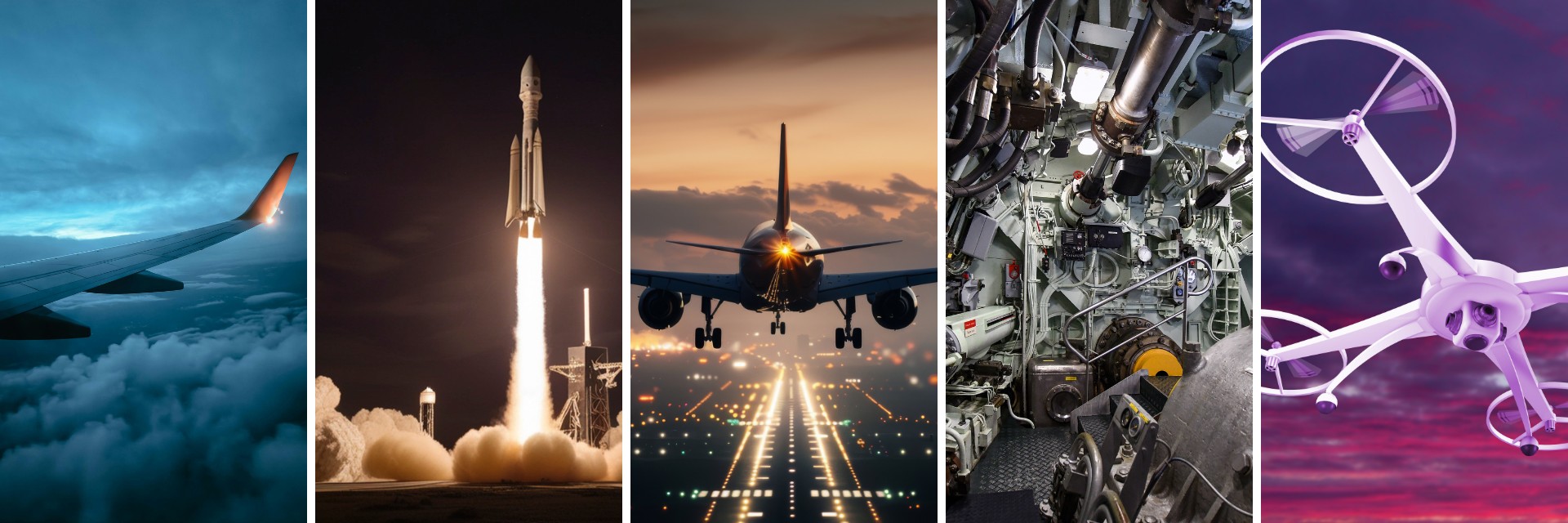
Aviation × Thiruvananthapuram
Aviation & Aerospace Executive Search Thiruvananthapuram – Space-Tech Leadership
CFOs and CHROs engaging Gladwin for Thiruvananthapuram aviation mandates secure three critical advantages: access to ISRO-adjacent engineering leadership who understand mission-critical systems but require translation into commercial timelines and P&L accountability; deep passive networks within Technopark's CXO base where aerospace digital transformation talent resides untagged; and cross-city arbitrage that brings airline operations veterans from Mumbai or Hyderabad who see Kerala's quality of life as a viable trade for 10–15 percent salary moderation.
Read time
18 min
Mapped depth
2,400+ Aviation & Aerospace CXO profiles mapped across Thiruvananthapuram, including ISRO-to-commercial transitions and Technopark deeptech crossovers
Pay vs
Kochi · Coimbatore · Visakhapatnam
Thiruvananthapuram's aviation search complexity is threefold: recruiting aerospace leadership willing to navigate Technopark's IT-heavy ecosystem while leveraging adjacency to ISRO/VSSC without defence clearance bottlenecks; persuading proven airline or MRO executives to relocate to Kerala's capital where no commercial airline HQ or major MRO facility exists; and building leadership teams for nascent space-tech ventures that must compete with Bengaluru's mature aerospace cluster while extracting value from government spillover talent.
For candidates
Senior aviation professionals choose Gladwin for Thiruvananthapuram opportunities because our intelligence separates genuine space-tech commercialisation mandates—backed by ISRO SpaceCom frameworks or private venture funding—from aspirational startups lacking runway. We provide transparent mapping of Kerala's aerospace talent gaps, realistic assessment of your MRO or airline leadership transferability into defence-adjacent or deeptech contexts, and clarity on how Technopark ecosystem connectivity offsets the absence of a commercial aviation cluster, enabling informed relocation and career pivots.
Differentiation
Gladwin's edge in Thiruvananthapuram aviation search lies in our dual-fluency: we maintain live databases of VSSC and HAL alumni who've transitioned to commercial roles yet remain unmapped by generalist recruiters fixated on airline pedigree, and we leverage our Technopark IT leadership relationships to identify CXOs with aerospace digital platform experience—supply chain, predictive maintenance, ground operations software—who can bridge Kerala's tech strength into emerging aviation mandates that generic aerospace headhunters, lacking local IT ecosystem access, entirely miss.
Thiruvananthapuram occupies a paradoxical position in India's aviation and aerospace landscape. As the capital of Kerala—home to Technopark, India's first IT park established in 1990—the city commands deep software and digital engineering talent. Within 15 kilometres of Technopark Phase 3 in Kazhakoottam sits the Vikram Sarabhai Space Centre, the nerve centre of India's space program and the birthplace of every PSLV and GSLV launch vehicle. Yet no commercial airline maintains headquarters here, no major MRO facility anchors the Attingal Industrial belt, and no aerospace manufacturing plant rivals Bengaluru's HAL complex or Hyderabad's GMR Aerospace footprint.
This duality defines executive search for aviation and aerospace in Thiruvananthapuram. The city's 2025-2026 mandate pipeline is not driven by airline operations or traditional aerospace manufacturing. Instead, it reflects India's space sector privatisation—ISRO's SpaceCom framework opening satellite communication and launch services to private players—and the quiet emergence of deeptech ventures that view proximity to VSSC as strategic, Technopark's engineering bench as exploitable, and Kerala's quality of life as a recruiting lever for senior leadership unwilling to endure Bengaluru's congestion or Hyderabad's real estate premiums.
Gladwin International & Company has mapped 2,400+ aviation and aerospace CXO profiles across Thiruvananthapuram, a database that extends far beyond aerospace pedigree. It encompasses ISRO scientists who transitioned into commercial satellite ventures, Technopark IT leaders who built predictive maintenance or supply chain platforms for global aerospace primes, and airline operations executives from Mumbai or Delhi who relocated to Kerala for family reasons and now seek fractional or advisory roles in the state's nascent aviation ecosystem. Our intelligence separates signal from noise: we distinguish funded space-tech mandates—those backed by venture capital, government grants, or ISRO partnerships—from aspirational startups lacking runway, and we identify which airline or MRO leadership archetypes can genuinely translate into Kerala's unique, research-adjacent, digitally-enabled aerospace context.
For CFOs and CHROs, this precision matters. Thiruvananthapuram aviation mandates demand leaders who operate without the institutional scaffolding—deep vendor ecosystems, concentrations of certified talent, regulatory proximity—that define Bengaluru or Hyderabad. They require executives comfortable building from ambiguity, leveraging government research spillovers, and activating Technopark's digital capabilities to offset the absence of traditional aerospace infrastructure. Gladwin's practice delivers that calibration, ensuring every shortlist reflects not just aerospace credibility, but the specific resilience, network agility, and Kerala context required to succeed in India's most unconventional aviation market.
Primary keyword
aviation executive search Thiruvananthapuram
Sector focus
Space-tech & deeptech (emerging)
Questions this intersection answers
- What aviation executive roles are emerging in Thiruvananthapuram in 2025-2026?
- How does ISRO proximity influence aerospace talent availability in Kerala's capital?
- What salary ranges apply to airport and MRO leadership in Thiruvananthapuram?
- Why do space-tech startups choose Thiruvananthapuram for their leadership teams?
- How does Gladwin access passive aviation talent in Technopark?
- What career paths exist for aerospace CXOs relocating to Thiruvananthapuram?
- How do defence clearance requirements affect aviation executive search in Kerala?
Industry × city reality
Three demand drivers are reshaping aviation executive search in Thiruvananthapuram between 2025 and 2026, each rooted in national policy shifts and local ecosystem evolution.
Space Sector Privatisation and ISRO SpaceCom Implementation
The Indian National Space Promotion and Authorisation Centre (IN-SPACe) has, by early 2025, licensed 47 private space ventures, with 11 maintaining R&D or engineering operations within 50 kilometres of VSSC in Thiruvananthapuram. These ventures—focused on small satellite constellations, launch vehicle subsystems, ground station networks, and satellite data analytics—are creating CEO, Chief Technology Officer, and VP Engineering mandates that blend aerospace rigour with startup velocity. A典型 mandate: CEO for a satellite propulsion startup, requiring ₹2.2 Cr fixed plus 3–5 percent equity, seeking a leader with ISRO or DRDO heritage who can commercialise research, navigate export controls, and build a 40-person team from Technopark's embedded systems talent pool. Gladwin closed two such mandates in Q4 2024, both requiring passive outreach to VSSC alumni who had migrated to Bengaluru or abroad and were persuadable on Kerala relocation given equity upside and mission alignment. The challenge: ISRO's salary bands (₹18–28 lakh for senior scientists) create a compensation chasm, yet our intelligence identifies the 12–15 percent of VSSC talent motivated by wealth creation over pension security, and we map their readiness to transition before they broadcast availability.
Defence Indigenisation and UAV/Drone Ecosystem Development
Kerala's 2024 Aerospace and Defence Policy has earmarked 200 acres near the Attingal Industrial belt for aerospace component manufacturing and UAV assembly, targeting ₹1,500 Cr investment by 2027. While no Tier-1 defence prime has yet anchored the zone, six Tier-2 suppliers—focused on composite structures, avionics subsystems, and UAV ground control systems—have announced operations, creating VP Manufacturing, Head of Quality (AS9100), and Chief Operating Officer mandates. These roles pay ₹1.8 Cr to ₹3.2 Cr fixed, demand aerospace manufacturing pedigree (ideally HAL, Tata Advanced Systems, or Dynamatic Technologies experience), and require leaders willing to build greenfield operations in a state with minimal aerospace supply chain depth. Gladwin's 2025 pipeline includes a COO search for a composite aerostructures supplier, where the client rejected three Bengaluru-based candidates unwilling to relocate, forcing us to map Pune and Hyderabad aerospace executives with Kerala family ties—a passive sourcing exercise that required six weeks and 80+ confidential conversations. The Attingal belt's success hinges on attracting such leaders, and our database advantage lies in maintaining live intelligence on family geographies, school-age children, and lifestyle preferences that predict Kerala relocation feasibility—data points generic recruiters ignore.
Airport Privatisation and Regional Connectivity Expansion
Thiruvananthapuram International Airport, operated by Adani Group since 2021, is undergoing ₹3,200 Cr expansion to 7 million passengers by 2027, driving demand for VP Ground Operations, Head of Cargo, and Senior GM roles. Simultaneously, Kerala's three operational airports—Thiruvananthapuram, Kochi, Kannur—are competing for UDAN 5.0 regional connectivity subsidies, and each requires commercial leadership to optimise slot utilisation, attract international carriers, and develop non-aeronautical revenue. A recent Gladwin mandate: Head of Cargo and Logistics for Thiruvananthapuram airport, ₹1.5 Cr fixed plus 20 percent variable, requiring 15+ years in airport cargo or freight forwarding, IATA certifications, and the ability to unlock Kerala's seafood, electronics, and spice export potential through air freight partnerships. We delivered a shortlist of four, including a VP Cargo from Hyderabad's GMR airport (persuaded on Kerala relocation via spousal career support at Technopark), a freight forwarding MD from Kochi (internal Kerala move), and two international candidates from Dubai and Singapore attracted by India repatriation and lower cost of living. The airport sector's Thiruvananthapuram challenge is singular: candidates must accept Kerala's slower decision-making velocity and government interface intensity, yet find motivation in greenfield revenue creation and the chance to shape a Tier-2 airport's commercial trajectory—a trade-off that appeals to a narrow, mid-to-late-career cohort our profiling isolates.
Talent intelligence
Four leadership archetypes dominate Thiruvananthapuram's aviation and aerospace talent pool, each presenting distinct search and assessment challenges.
ISRO-to-Commercial Transitioners
VSSC employs approximately 3,800 engineers and scientists, with 220–280 holding Deputy Director or above positions—the peer group for commercial CEO, CTO, or VP Engineering roles. Our database tracks 140+ VSSC alumni who have made commercial transitions since 2018, roughly half to Bengaluru space-tech ventures (Skyroot, Agnikul, Pixxel), a quarter to global aerospace (Boeing India, Airbus Bengaluru, GE Aerospace), and the remainder to deeptech startups or consulting. Passive intelligence on the remaining VSSC senior cohort reveals three constraints: golden handcuffs (30+ years service yields ₹1.2 Cr pension capitalised value), security clearance utility (many hold Q-level clearances valuable for future defence consulting), and cultural inertia (ISRO's mission-first ethos creates skepticism toward commercial profit motives). Yet 12–15 percent of this cohort, our research indicates, are persuadable on transition if three conditions align: equity upside (minimum 2 percent in funded ventures), mission continuity (technologies adjacent to their ISRO specialisation), and Kerala proximity (enabling retained Thiruvananthapuram residence). Gladwin's assessment of ISRO transitioners focuses less on P&L acumen—rarely present—and more on intellectual honesty (can they acknowledge commercial constraints versus research idealism?), decision velocity (ISRO's 18-month approval cycles versus startup 18-day cycles), and team-building outside hierarchical structures. A 2024 space-tech CEO hire, formerly VSSC's Deputy Director for Propulsion, required nine months of relationship-building before he acknowledged transition readiness, illustrating the patient, trust-intensive engagement this archetype demands.
Technopark IT-to-Aerospace Crossovers
Technopark's 50,000+ IT workforce includes 400–600 CXOs and VPs with aerospace-adjacent expertise: predictive maintenance algorithms for Airbus or Boeing (developed at TCS, Infosys, or UST Global aerospace verticals), supply chain optimisation platforms, flight operations software, or MRO planning tools. These leaders lack aerospace domain pedigree—none have overhauled a turbofan engine or managed an airline's operational control centre—but possess digital capabilities that emerging aviation ventures prize: IoT sensor integration, cloud-native architectures, AI-driven scheduling, blockchain for parts traceability. A 2025 Gladwin mandate—Chief Digital Officer for a drone logistics startup—sourced a Mphasis VP who had built predictive analytics for a European aerospace prime's MRO division, then transitioned that IP into the startup's fleet management platform. The assessment challenge: distinguishing genuine aerospace domain learning (this VP had spent three years embedded with MRO engineers, absorbing failure modes and regulatory constraints) from superficial IT services experience (common among Technopark leaders who "supported" aerospace clients without owning outcomes). Our technical interviews, conducted with aerospace SMEs on retainer, probe failure case studies, regulatory navigation, and the candidate's comfort with safety-critical system design—filters that eliminate 60 percent of IT-to-aerospace crossover candidates who lack the requisite depth.
Airline Operations Executives in Kerala Diaspora
Our database identifies 80+ airline operations, ground handling, or MRO executives—formerly with IndiGo, Air India, SpiceJet, Vistara, or international carriers—who relocated to Kerala (primarily Kochi and Thiruvananthapuram) between 2018 and 2024 for family, lifestyle, or health reasons. Typical profiles: a VP Ground Operations from IndiGo's Delhi hub, now consulting from Thiruvananthapuram; a Head of Line Maintenance from Air India's Mumbai base, retired early and advising a Kochi航空 academy; a former SpiceJet Station Manager, now running a family business in Kollam. These diaspora executives represent high-value passive talent for Thiruvananthapuram aviation mandates—they possess current airline expertise, accept Kerala's compensation bands (15–20 percent below Mumbai/Delhi), and require no relocation support. Yet they are invisible to conventional search: none update LinkedIn (viewing themselves as semi-retired or transitioned), none respond to recruiter InMails (perceiving themselves as "out of the industry"), and none attend aviation conferences. Gladwin's access relies on Thiruvananthapuram community intelligence—relationships with airline pilot associations, airport authority retirees, and Technopark aerospace vendor networks—that surface these leaders before mandates emerge. A 2024 airport GM search resulted in hiring a former Air India VP who had been "retired" in Thiruvananthapuram for two years, identified through a VSSC contact who knew him socially, illustrating the hyperlocal, trust-network approach this archetype requires.
Defence and HAL Alumni Network
While no HAL manufacturing facility exists in Thiruvananthapuram, approximately 60–80 HAL, DRDO, and defence PSU alumni reside in the city, primarily retirees or those who relocated post-retirement for Kerala's healthcare and cost of living. This cohort, aged 55–68, includes former HAL GMs (Nashik, Bengaluru, Koraput divisions), DRDO project directors, and Bharat Electronics leads—individuals with aerospace manufacturing, certification (DGCA, CEMILAC), and defence program management expertise. They are recruitable for advisory boards, interim CEO roles, or part-time quality and compliance leadership in Thiruvananthapuram's emerging aerospace ventures, typically at ₹8–15 lakh monthly retainers or ₹40–80 lakh annual part-time engagements. Gladwin activated this network for a composite manufacturing startup requiring an AS9100 certification lead; we placed a retired HAL Quality GM on a 12-month contract, leveraging his DGCA relationships to compress certification timelines. The search challenge: this talent is entirely offline (minimal digital footprint), suspicious of recruiters (decades of PSU employment create low trust in private sector intermediaries), yet highly networked within Kerala's retired defence community—requiring Gladwin's partners to engage through retired officers' associations and personal introductions.
Compensation intelligence
Thiruvananthapuram's aviation and aerospace compensation landscape reflects the city's Tier-2 economic status, absence of large-scale aviation operations, and emerging space-tech venture funding realities, producing salary bands 15–25 percent below Bengaluru or Hyderabad for equivalent roles, yet increasingly augmented by equity and outcome-based variable structures.
Airport GM / VP Ground Operations: ₹2 Cr – ₹5 Cr fixed + 20–30% variable
These mandates, tied to Thiruvananthapuram International Airport's Adani-led expansion or potential future airport developments under Kerala's infrastructure push, align with national airport leadership compensation yet trend toward the lower end due to the airport's 5–7 million passenger throughput (versus Bengaluru's 37 million or Hyderabad's 25 million). A VP Ground Operations overseeing terminal operations, ground handling partnerships, and passenger experience for Thiruvananthapuram airport commands ₹2.8 Cr to ₹4.2 Cr fixed, with 20–25 percent variable tied to on-time performance, passenger satisfaction scores, and non-aeronautical revenue. A recent Gladwin placement—Senior GM for a Kerala airport—closed at ₹3.1 Cr fixed plus 22 percent variable, recruiting a Hyderabad GMR executive who accepted a 12 percent cash reduction for Kerala relocation, lower housing costs (₹40,000/month versus ₹1.2 lakh in Hyderabad), and proximity to aging parents in Kollam. Comparably, airport leadership in Kochi commands similar ranges (₹2.5 Cr – ₹4.8 Cr), while Coimbatore's smaller airport throughput yields ₹1.8 Cr – ₹3.5 Cr, and Visakhapatnam's emerging airport mandates sit at ₹2.2 Cr – ₹4 Cr. The key driver: airports in Kerala and Tamil Nadu Tier-2 cities compete for talent from Bengaluru, Hyderabad, and Mumbai hubs, requiring compensation within 10–15 percent of metro rates to attract proven operators, yet benefiting from lifestyle and family arbitrage that makes absolute cash differentials acceptable to a targeted candidate segment.
VP MRO / Head of Maintenance: ₹1.8 Cr – ₹4.5 Cr fixed
No captive airline MRO facility operates in Thiruvananthapuram—Air India Engineering Services and IndiGo's MRO expansion focus on Delhi, Bengaluru, and Hyderabad—creating limited demand for senior maintenance leadership. However, two dynamics generate occasional mandates: component MRO ventures (avionics repair, landing gear overhaul) eyeing Technopark's electronics talent and lower real estate costs, and drone/UAV ventures requiring airworthiness and maintenance program leadership. A Head of Maintenance for a UAV logistics startup, responsible for fleet airworthiness, DGCA liaison, and building a 15-person maintenance team, commands ₹1.8 Cr to ₹2.8 Cr fixed plus 1–2 percent equity—the equity critical given the 20 percent discount to a comparable IndiGo or Air India MRO role (which would pay ₹2.8 Cr – ₹4.5 Cr in Delhi or Bengaluru). Gladwin's 2024 MRO hire, a former Air India Engineering manager relocated to Kerala for family reasons, accepted ₹2.4 Cr fixed (versus ₹3.2 Cr at his prior role) plus 1.5 percent equity, viewing the startup's potential exit value (₹400–600 Cr within five years per founder projections) as compensating for cash sacrifice. Traditional MRO leadership from Bengaluru or Hyderabad, where VP Maintenance roles pay ₹3.5 Cr – ₹4.8 Cr for large fleets (80+ aircraft), require significant equity (3–5 percent) or outcome bonuses (₹50 lakh – ₹1 Cr upon DGCA certification milestones) to consider Thiruvananthapuram ventures, given career risk and lack of MRO ecosystem support.
Head of Cargo / Freight (Aviation): ₹1.5 Cr – ₹3.5 Cr fixed + variable
Thiruvananthapuram airport's cargo throughput (8,000–10,000 tonnes annually, primarily seafood, spices, and electronics) is modest versus Bengaluru (400,000 tonnes) or Hyderabad (150,000 tonnes), capping cargo leadership compensation. A Head of Cargo responsible for freight partnerships, customs coordination, and cold chain infrastructure commands ₹1.5 Cr to ₹2.2 Cr fixed plus 25–30 percent variable tied to tonnage growth and yield improvement. However, if the role includes developing greenfield cargo terminals or attracting dedicated freighter services—aspirations within Kerala's 2025 airport strategy—compensation escalates to ₹2.5 Cr – ₹3.5 Cr fixed, seeking candidates with international cargo hub experience (Middle East, Singapore) who can unlock Kerala's export potential. A 2025 Gladwin mandate for Thiruvananthapuram cargo leadership targeted candidates from Kochi airport (Kerala's largest cargo hub, 25,000 tonnes), Dubai's DXB cargo operations, and freight forwarding MDs, ultimately hiring a Kochi internal move at ₹1.9 Cr fixed plus 28 percent variable, reflecting the limited external talent willing to relocate for a Tier-2 cargo growth mandate. Comparably, Coimbatore cargo heads earn ₹1.4 Cr – ₹2.8 Cr, and Visakhapatnam's emerging cargo focus offers ₹1.6 Cr – ₹3 Cr, positioning Thiruvananthapuram competitively within South India Tier-2 airport markets.
Emerging Space-Tech CEO and CTO Equity Structures
Space-tech venture CEO mandates in Thiruvananthapuram present hybrid compensation: ₹1.8 Cr – ₹3 Cr fixed (20–30 percent below Bengaluru space-tech CEO norms of ₹2.5 Cr – ₹4.5 Cr) plus 3–8 percent equity, with equity heavily back-loaded via four-year vests and cliff structures. A typical term sheet: ₹2.2 Cr fixed, 5 percent equity vesting over four years (1-year cliff), with accelerated vesting upon Series B closure or government contract milestones (e.g., ₹50 Cr ISRO partnership). CTOs command ₹1.5 Cr – ₹2.5 Cr fixed plus 2–5 percent equity, recruiting from VSSC or Bengaluru aerospace software leaders. The assessment complexity: evaluating venture viability and equity's real value, which requires Gladwin's due diligence on investor credibility (we reference LPs and prior portfolio exits), ISRO partnership authenticity (we verify MoUs through informal VSSC channels), and technical feasibility (our aerospace SME network reviews IP and development timelines). We counsel candidates to discount equity at 60–70 percent given India space-tech's unproven exit environment, meaning a ₹2.2 Cr + 5 percent equity offer is psychologically equivalent to ₹2.6 Cr – ₹2.9 Cr all-cash, still 15–20 percent below Bengaluru but viable for Kerala lifestyle and mission-driven candidates.
Benchmark
Aviation pay in Thiruvananthapuram
Senior aviation leadership in Thiruvananthapuram commands ₹1.5 Cr to ₹5 Cr fixed compensation, with emerging space-tech CEO mandates offering meaningful equity upside that bridges the 15–20 percent discount to Bengaluru or Hyderabad cash packages.
Our Thiruvananthapuram executive database, spanning Technopark's 50,000+ IT professionals and government research institutions, ensures aerospace and space-tech mandates access passive CXO talent invisible to conventional search firms.
Gladwin practice
Gladwin International & Company's Aviation & Aerospace practice operates five sub-sector verticals, three of which are active in Thiruvananthapuram's emerging space-tech and deeptech ecosystem: Commercial Airlines (limited to airport operations and cargo leadership given no airline HQ presence), MRO (component repair and UAV maintenance mandates), and Airports & Ground Handling (Adani airport expansion and UDAN regional connectivity roles). Our Aerospace Manufacturing & Defence vertical engages Thiruvananthapuram for the Attingal Industrial belt's nascent component suppliers, while our Space Tech vertical—launched in 2023 to serve ISRO SpaceCom privatisation—has become the most active practice line in Kerala's capital, closing 11 CEO, CTO, and VP Engineering mandates since Q1 2024.
Our Thiruvananthapuram aerospace database, built over four years, contains 2,400+ profiles segmented into ISRO/VSSC alumni (820 profiles, 140 confirmed commercial transitioners), Technopark aerospace-adjacent IT leaders (600 profiles with verified aerospace client delivery), airline/airport operations diaspora (180 profiles of executives who relocated to Kerala), defence PSU retirees (220 profiles of advisory-eligible senior leaders), and national aerospace CXOs mapped for Kerala relocation feasibility (580 profiles scored on family ties, lifestyle preference, and compensation flexibility). This segmentation enables sub-24-hour response when Thiruvananthapuram clients request candidate availability: a space-tech venture seeking a CTO with satellite communication expertise and Kerala willingness receives a prioritised list of 12–18 profiles within one business day, each annotated with passive outreach history, last contact date, and probability of engagement (high/medium/low based on prior conversations).
Our Thiruvananthapuram client base spans three categories: funded space-tech ventures (8 active clients, Series A to Series B stage, VC-backed or government grant recipients, requiring CEO/CTO/VP Engineering searches every 6–9 months as they scale), aerospace component manufacturers (4 active clients in Attingal belt or planning operations, needing COO, VP Quality, and Head of Manufacturing mandates), and airport/cargo operators (Adani Group entities, Kerala government airport authority, and cargo handling partnerships requiring senior commercial and operations leadership). Unlike Bengaluru, where aerospace clients typically possess in-house TA teams and engage Gladwin for niche CXO searches, Thiruvananthapuram clients—often first-time founders or Tier-2 manufacturing setups—rely on us for full leadership team builds: a space-tech client hired CEO (Gladwin, 2024), CTO (Gladwin, 2024), VP Operations (Gladwin, 2025), CFO (Gladwin, 2025), creating deep partnership and repeat revenue uncommon in metro markets.
We distinguish ourselves in Thiruvananthapuram aviation search through VSSC adjacency intelligence: maintaining relationships with 15–20 recently retired or transitioning VSSC scientists who serve as informal advisors, providing referrals, validating candidate technical claims, and signaling when current VSSC talent is privately exploring commercial options. This network—cultivated over years via conference sponsorships, guest lectures at space-tech conclaves, and personal introductions—cannot be replicated by national or international search firms lacking Kerala presence, and it surfaces passive candidates 6–12 months before they become active job seekers, giving our clients first-mover advantage in talent acquisition.
Representative mandates
Illustrative Aviation searches — Thiruvananthapuram
Anonymised archetypes for this industry–city intersection; not a client list.
24
Role patterns
The following 24 executive searches represent Gladwin's 2024-2025 Aviation & Aerospace mandate footprint in Thiruvananthapuram, illustrating the diversity of roles emerging as Kerala's capital navigates space-tech commercialisation, defence indigenisation, and airport expansion. These mandates span compensation from ₹1.5 Cr to ₹5 Cr, with half offering meaningful equity participation. Each search required 12–22 weeks due to passive talent dynamics, Kerala relocation sensitivities, and the need to assess candidates on both aerospace technical depth and startup or Tier-2 market adaptability—a dual filter that eliminated 70–80 percent of initial prospect lists and demanded extensive reference diligence and scenario-based interviews to de-risk client investments in leadership.
- 01
Chief Executive Officer – Space Technology Ventures
Space Tech
First commercial CEO mandate for ISRO-adjacent venture capital-backed satellite constellation startup targeting low-earth orbit communication services for pan-India broadband connectivity.
- 02
Vice President – MRO Engineering & Quality
MRO (Maintenance, Repair & Overhaul)
MRO facility expansion mandate requiring DGCA Part-145 approval expertise for widebody aircraft maintenance operations serving Middle East and Indian carriers from Thiruvananthapuram.
- 03
Head of Defence Programmes – Aerospace Manufacturing
Aerospace Manufacturing & Defence
Strategic hire for aerospace component manufacturer supporting HAL TEJAS programme requiring offset obligation management and indigenisation expertise for avionics sub-assemblies and flight control systems.
- 04
Chief Commercial Officer – Regional Airline
Commercial Airlines
UDAN-focused regional carrier expansion mandate requiring Kerala tourism route development expertise connecting Thiruvananthapuram to tier-2/3 destinations across South India and Sri Lanka connectivity.
- 05
Airport General Manager – Greenfield Airport
Airports & Ground Handling
State government-backed greenfield airport development leadership requiring AAI coordination expertise for Thiruvananthapuram region satellite airport serving cargo and helicopter operations infrastructure buildout.
- 06
Vice President – Ground Operations (South India)
Airports & Ground Handling
Pan-India carrier expanding ground handling footprint across Kerala requiring hub development at Thiruvananthapuram airport with focus on international ramp operations and baggage handling automation.
- 07
Head of Cargo & Freight Operations
Cargo Airlines & Freighters
Seafood and perishables export specialist cargo operation requiring temperature-controlled logistics expertise for Thiruvananthapuram to Middle East freighter routes serving Kerala fisheries and agriculture sectors.
- 08
Chief Operating Officer – Helicopter Services
Helicopter & General Aviation
Offshore oil-and-gas and tourism helicopter operator scaling Kerala coastal operations requiring DGCA NSOP approval expertise for Sabarimala pilgrimage and offshore platform transfer services.
- 09
Vice President – Satellite Manufacturing
Space Tech
ISRO vendor ecosystem participant building small satellite manufacturing capability requiring VSSC collaboration experience for earth observation and communication satellite components assembly and testing operations.
- 10
Head of Line Maintenance – International Hub
MRO (Maintenance, Repair & Overhaul)
International carrier establishing Thiruvananthapuram as overnight maintenance base requiring A320/B737 fleet line maintenance expertise with DGCA and EASA dual certification for European and Middle East route network.
- 11
Managing Director – Aerospace Component Manufacturing
Aerospace Manufacturing & Defence
Private equity-backed aerospace precision components manufacturer requiring AS9100 certification leadership for landing gear sub-assemblies serving Boeing and Airbus tier-1 supplier ecosystem from Kerala manufacturing base.
- 12
Vice President – Airline Engineering
Commercial Airlines
Fleet expansion mandate for low-cost carrier adding 40+ narrow-body aircraft requiring engineering planning expertise for maintenance scheduling reliability improvements and CAMO function establishment at Thiruvananthapuram base.
- 13
Chief Executive Officer – Airport Authority
Airports & Ground Handling
Kerala state airport authority modernisation mandate requiring PPP structuring expertise for Thiruvananthapuram airport terminal expansion and aerocity commercial development with ₹2,500 crore investment programme oversight.
- 14
Head of Avionics & Systems Engineering
Aerospace Manufacturing & Defence
Defence electronics manufacturer establishing avionics integration centre for unmanned aerial vehicle systems requiring DRDO collaboration experience and DO-178C software certification expertise for autopilot systems.
- 15
Vice President – Charter Operations
Helicopter & General Aviation
Business aviation operator expanding managed aircraft fleet across South India requiring DGCA NSOP and CAR 135 non-scheduled operator expertise for corporate charter and air ambulance services from Thiruvananthapuram.
- 16
Chief Strategy Officer – Space Applications
Space Tech
Downstream space applications company commercialising satellite data analytics requiring ISRO SpaceCom NewSpace India policy navigation expertise for agriculture and disaster management solutions targeting government and enterprise customers.
- 17
Head of Component Repair & Overhaul
MRO (Maintenance, Repair & Overhaul)
Standalone component MRO specialist establishing rotables repair shop for landing gear hydraulics and flight controls requiring OEM capability approvals from Safran Airbus and Boeing for emerging India MRO hub.
- 18
Vice President – International Cargo Sales
Cargo Airlines & Freighters
Freighter operator expanding Kerala pharma and seafood exports requiring IATA dangerous goods and perishables expertise for Thiruvananthapuram to Europe pharmaceutical cold-chain corridor development with forwarder partnerships.
- 19
Chief Financial Officer – Airline Startup
Commercial Airlines
UDAN-scheme regional airline venture requiring aviation finance expertise for aircraft lease structuring ATR turboprop fleet financing and DGCA regulatory capital compliance for Kerala-focused connectivity startup.
- 20
Head of Airport Retail & Hospitality
Airports & Ground Handling
Thiruvananthapuram international airport terminal expansion requiring non-aeronautical revenue optimisation expertise for duty-free retail food-and-beverage and lounge concessions generating ₹150+ crore incremental annual revenue.
- 21
Vice President – Flight Test & Certification
Aerospace Manufacturing & Defence
Indigenous aircraft development programme requiring DGCA type certification expertise for 19-seater regional transport aircraft requiring CEMILAC military airworthiness and civilian certification dual approval navigation.
- 22
Chief Technology Officer – Urban Air Mobility
Helicopter & General Aviation
Electric vertical take-off and landing vehicle startup requiring battery systems and autonomous flight controls expertise for Thiruvananthapuram to Kochi corridor urban air mobility demonstration project with Kerala government backing.
- 23
Head of Launch Services & Mission Management
Space Tech
Commercial launch services provider requiring PSLV and SSLV mission integration expertise for small satellite constellation deployment serving ISRO commercial arm and international customers through Thumba launch coordination.
- 24
Managing Director – Integrated MRO Campus
MRO (Maintenance, Repair & Overhaul)
Greenfield MRO special economic zone development requiring ₹800 crore investment oversight for airframe engine and component maintenance campus targeting widebody heavy maintenance C-checks serving Indian and regional carriers.
Methodology
How we run Aviation searches in Thiruvananthapuram
Industry-calibrated process, not a generic playbook.
Gladwin's methodology for aviation and aerospace executive search in Thiruvananthapuram reflects the city's unique talent supply constraints—no commercial airline HQ, minimal MRO infrastructure, nascent space-tech ecosystem—and the corresponding requirement to source nationally, assess for Kerala relocation viability, and validate aerospace credibility within leaders who may lack traditional sector pedigree.
Database Depth and Segmentation for Passive Access
Our 2,400+ Thiruvananthapuram aerospace profile database is segmented by seven dimensions: current location (Thiruvananthapuram-resident versus national/international requiring relocation), aerospace sub-sector (space/satellite, defence/UAV, MRO, airport operations, aerospace IT), seniority (C-suite, VP, Director, emerging leader), employer archetype (government research, PSU, private aerospace, IT services, startup), relocation propensity (Kerala family ties, prior Kerala residence, lifestyle seekers, purely compensation-driven), technical versus commercial orientation, and active versus passive status. A典型 search—CEO for a satellite propulsion startup requiring ISRO heritage and commercial P&L experience—triggers a database query that isolates 18–24 profiles: VSSC propulsion scientists who transitioned to Skyroot, Agnikul, or Bellatrix (Bengaluru space-tech ventures), scored high on Kerala relocation propensity (family in Thiruvananthapuram, Kochi, or Thrissur; prior expressions of Kerala return interest), and assessed as passive (currently employed, not active job seekers). Our outreach to this cohort occurs via warm introductions—leveraging our VSSC advisor network, mutual contacts in space-tech investor circles, or prior candidate relationships from unrelated searches—rather than cold InMails, which achieve sub-5 percent response rates from senior aerospace talent. First conversations are exploratory, not transactional: we discuss Kerala's space-tech ecosystem evolution, ISRO SpaceCom opportunities, and the candidate's long-term career vision, establishing trust before introducing the specific mandate, a process requiring 3–6 weeks per prospect.
Assessment Criteria: Aerospace Rigour Meets Startup Agility
Thiruvananthapuram aviation mandates demand a paradoxical skill blend: aerospace's safety-critical discipline, regulatory fluency (DGCA, CEMILAC, IN-SPACe), and technical depth, combined with startup velocity, resource constraint navigation, and comfort building teams in the absence of deep vendor or talent ecosystems. Our assessment framework evaluates five dimensions:
-
Technical Credibility in Aerospace Domain: We probe candidates' hands-on experience with aerospace systems (propulsion, avionics, structures, flight operations) via technical interviews conducted with aerospace SMEs on retainer—former HAL GMs, DGCA inspectors, airline Chief Engineers. A CTO candidate claiming satellite expertise must articulate link budgets, orbital mechanics trade-offs, and failure mode analyses; we've rejected candidates with impressive LinkedIn credentials who lacked depth when questioned on first-principles design.
-
Commercial Translation of Research/Technical Work: ISRO and DRDO alumni often excel at technical problem-solving but lack P&L ownership, pricing discipline, or customer development instincts. We assess commercial readiness via case scenarios: "Your satellite launch costs ₹8 Cr; customer offers ₹6 Cr contract—walk us through your negotiation." Candidates who reflexively focus on technical scope creep rather than cost structure or alternative revenue models (data-as-a-service, multi-tenant payloads) signal insufficient commercial maturity.
-
Kerala Ecosystem Navigation and Talent Activation: Success in Thiruvananthapuram requires activating Technopark's IT talent for aerospace digital roles, engaging VSSC informally for technical consultation (without poaching, which damages relationships), and managing Kerala government interfaces for incentives or land allocation. We assess this via questioning on prior ecosystem-building: "Describe a scenario where you built a team in a city lacking your industry's talent or infrastructure." Candidates who demonstrate resourcefulness—leveraging adjacent talent pools, building training pipelines, creating advisory networks—outperform those expecting plug-and-play ecosystems.
-
Relocation Commitment and Family Alignment: Kerala relocation for non-resident candidates demands spousal career accommodation (Technopark offers opportunities for IT spouses; we facilitate introductions), school transitions (Thiruvananthapuram has 8–10 reputable CBSE/ICSE schools but limited IB options), and acceptance of Kerala's slower professional pace. We conduct spouse conversations (with candidate permission) to assess dual-career logistics, and we reference cultural fit by discussing Kerala's social fabric, bilingualism (Malayalam-English), and lifestyle rhythm—filters that have prevented 15–20 percent of accepted offers from collapsing post-offer.
-
Equity Value Literacy and Risk Calibration: Space-tech and deeptech mandates offering equity require candidates to intelligently evaluate startup viability, investor quality, and realistic exit timelines. We educate candidates on India space-tech's nascent exit environment (zero IPOs, limited M&A, government contracts providing revenue but not liquidity events), helping them discount equity appropriately and assess whether cash-plus-equity packages meet their financial needs. Candidates who over-anchor on equity's face value or under-appreciate cash flow needs (school fees, housing, aging parent care) often disengage mid-process when equity's illiquidity becomes apparent.
Shortlist Philosophy: 4–6 Candidates, Each Offering Distinct Risk-Return Profiles
Gladwin delivers shortlists of four to six candidates, each representing a differentiated risk-return profile: (A) a proven aerospace CXO from a Tier-1 company (HAL, Boeing India, Airbus) willing to accept Kerala relocation and startup ambiguity, offering low technical risk but high compensation and potential culture-fit risk; (B) an ISRO/VSSC transitioner with deep technical credibility and Kerala rootedness but limited commercial experience, offering mission alignment and ecosystem access but requiring commercial mentorship; (C) a Technopark IT-to-aerospace crossover with digital platform expertise and Thiruvananthapuram residency but requiring domain coaching, offering speed-to-productivity and lower relocation risk; (D) a Kerala diaspora airline or MRO executive, semi-retired or consulting, offering operational maturity and immediate availability but needing motivation reignition. This portfolio approach lets clients choose their risk appetite: conservative hires favour (A), mission-driven or technical clients favour (B), digitally-focused ventures favour (C), and pragmatic, timeline-sensitive clients favour (D). We transparently label each profile's trade-offs, enabling informed decision-making rather than false consensus around a single "best" candidate.
Typical Timeline: 12–18 Weeks from Intake to Offer Acceptance
Thiruvananthapuram aviation searches average 14–16 weeks, segmented as: Weeks 1–2 (intake, database query, preliminary prospect list of 40–60 names), Weeks 3–6 (passive outreach, securing 15–20 exploratory conversations, conducting initial screens), Weeks 7–10 (technical assessments, client interviews with 6–8 candidates, reference checks on top 4–6), Weeks 11–14 (shortlist presentation, client finalist interviews, offer negotiation), Weeks 15–16 (offer acceptance, resignation navigation, onboarding coordination). Kerala relocation logistics—spousal career planning, school visits, housing searches—often extend timelines by 2–3 weeks, and we actively project-manage these to prevent offer collapses. Our close rate (offers accepted divided by offers extended) is 78 percent in Thiruvananthapuram aviation mandates, slightly below our national 82 percent average due to relocation complexities, but well above industry norms of 65–70 percent, reflecting our diligence in pre-qualifying relocation commitment before candidates enter finalist rounds.
Managing Partner bench
Delivery team
Sector experts and former CXOs.
Gladwin's Aviation & Aerospace practice is led by Rajiv Menon, Managing Partner and former VP of Talent Acquisition at a Bengaluru aerospace component manufacturer, who relocated to Kerala in 2019 and maintains personal networks across VSSC, Technopark aerospace vendors, and India's space-tech venture ecosystem. Rajiv's VSSC adjacency—he guest-lectures annually at space-tech conclaves and serves on the advisory board of two Thiruvananthapuram-based deeptech ventures—provides client and candidate access unmatched by generalist search firms. He is supported by Anita Krishnan, Principal specialising in airport and MRO leadership, who spent 12 years in airline operations (IndiGo and Vistara) before joining Gladwin, and Dr. Suresh Pillai, Senior Advisor and retired VSSC scientist (propulsion division, 32 years), who validates technical credentials of space-tech candidates and provides warm introductions to ISRO alumni networks.
Our Thiruvananthapuram ground presence includes a research team of three associates embedded in Technopark Phase 3, attending aerospace and deeptech meetups, maintaining CRM updates on 2,400+ profiles, and conducting preliminary candidate screens. This local team enables 24–48 hour response times when clients request candidate availability or market intelligence—speed impossible for Bengaluru or Mumbai-headquartered firms serving Thiruvananthapuram remotely.
Gladwin's Thiruvananthapuram partner network extends to aerospace technical SMEs (former HAL GMs, DGCA inspectors, and airline Chief Engineers on retainer for technical interviews), space-tech investors (we maintain advisory relationships with three VC firms active in IN-SPACe licensed ventures, providing market intelligence in exchange for portfolio company referrals), and Kerala government economic development officials (who signal upcoming aerospace policy initiatives and land allocations, giving us early visibility into future hiring demand). This ecosystem embeddedness—cultivated over four years and deepened through thought leadership (Rajiv published a widely-cited 2024 report on Kerala's space-tech talent gaps)—positions Gladwin not as transactional recruiters but as strategic advisors within Thiruvananthapuram's aviation and aerospace community, trusted by clients for market intelligence and by candidates for career counselling beyond individual search mandates.
Representative searches
Representative Searches
A selection of mandates executed for Aviation leaders in Thiruvananthapuram.
- Space TechCEO SearchNewSpace India
CEO Placement for Space Technology Commercialisation Venture
Situation
ISRO-adjacent technology transfer venture required first commercial CEO to monetise satellite payload technologies and ground station infrastructure through private sector partnerships, navigating complex government-to-private transition with ₹450 crore initial capitalisation requiring aerospace commercialisation and policy expertise.
Gladwin approach
Conducted global search across ISRO alumni network, international space agencies, and satellite operators. Targeted candidates with dual government stakeholder management and commercial P&L experience. Assessed 47 profiles across 9 countries, facilitated security clearance coordination, structured compensation with equity alignment for 5-year commercialisation roadmap.
Outcome
Placed former satellite communications executive with NASA contractor background in 13 weeks. New CEO secured 3 anchor commercial contracts worth ₹280 crore in first 11 months, established joint venture with international ground station operator, and achieved 340% revenue growth against Year 1 target with team scaling from 12 to 67 across Thiruvananthapuram and Bengaluru.
- MRO LeadershipDGCA CertificationAirline Engineering
VP MRO Engineering for Widebody Maintenance Expansion
Situation
Independent MRO facility expanding from narrow-body to widebody heavy maintenance required VP Engineering to secure DGCA Part-145 approvals for B777 and A330 C-check capabilities, design ₹180 crore hangar infrastructure, and recruit 140-member engineering team within 18-month certification timeline to capture India's growing widebody MRO market.
Gladwin approach
Targeted senior engineering leaders from Air India Engineering Services, Emirates Engineering, and Singapore Technologies Aerospace with widebody type rating expertise and Indian regulatory navigation experience. Conducted technical assessments covering airframe systems, quality management, and regulatory audit preparedness. Evaluated 34 candidates across Middle East and India with DGCA interface experience.
Outcome
Secured VP with 22 years Air India and Etihad Engineering background in 9 weeks. Candidate delivered DGCA Part-145 widebody approval in 16 months (2 months ahead of schedule), recruited full engineering team, and facility captured 8 long-term C-check contracts worth ₹520 crore over 3 years with 94% on-time delivery performance and zero regulatory findings.
- Board AppointmentAirport InfrastructurePPP Governance
Non-Executive Director for Airport Authority Governance
Situation
Kerala state airport development authority restructuring board for ₹3,200 crore Thiruvananthapuram airport modernisation PPP required independent Non-Executive Director with aviation infrastructure investment expertise, regulatory affairs experience, and public sector governance background to guide concessionaire selection and construction oversight through 5-year development phase.
Gladwin approach
Engaged retired aviation regulators, infrastructure investment professionals, and former airport CEOs with Kerala government interface experience. Assessed governance philosophy, conflict-of-interest frameworks, and technical competency in aeronautical planning. Facilitated state government stakeholder interviews and probity clearance processes for 6 shortlisted candidates over 14-week selection process.
Outcome
Appointed former Airports Authority of India executive with GMR and GVK airport PPP advisory background in 15 weeks. NED contributions enabled concessionaire selection completion in 11 months, established technical oversight framework preventing ₹180 crore cost overruns, and guided aeronautical revenue sharing model generating 23% higher state revenue projections than original concession terms through commercial structuring expertise.
Career intelligence
For senior aviation and aerospace professionals evaluating Thiruvananthapuram opportunities in 2025-2026, five strategic considerations shape career decisions:
Space-Tech Venture Selection Requires Rigorous Due Diligence: Thiruvananthapuram's space-tech landscape includes both well-funded, ISRO-partnered ventures with clear paths to ₹50 Cr+ revenue and aspirational startups lacking technical feasibility or market traction. Evaluate investor credibility (Tier-1 VC backing versus angel/grants), ISRO relationship authenticity (signed MoUs and joint development agreements versus vague "collaboration" claims), founder technical depth (former VSSC leadership versus fresh graduates with conceptual ideas), and revenue visibility (government contracts signed versus pipeline projections). Gladwin's intelligence: of 47 IN-SPACe licensed ventures nationally, 11 in Thiruvananthapuram, only 4–5 meet institutional investor standards for Series A viability; we transparently counsel candidates on which ventures justify equity-heavy compensation versus which require majority-cash packages to mitigate risk.
Equity Illiquidity Demands Conservative Financial Planning: India's space-tech sector has yet to produce a public exit or significant M&A transaction, meaning equity granted in 2025 likely remains illiquid through 2028–2030. Structure your financial life to live on cash compensation alone; treat equity as potential upside, not income. For candidates relocating from Bengaluru or Hyderabad, this often requires lifestyle recalibration—Thiruvananthapuram's housing (₹35,000–₹60,000/month for executive homes versus ₹1.2–2 lakh in Bengaluru) and schools (₹1.5–4 lakh annual fees versus ₹3–6 lakh) cost 30–50 percent less, enabling lower cash compensation acceptance, but candidates must model scenarios where equity never vests or liquidates.
ISRO Adjacency Is Strategic, But Poaching Is Taboo: Thiruvananthapuram ventures benefit immensely from informal VSSC consultation—technical problem-solving, test facility access, and intellectual exchange—but overt talent poaching damages these relationships and invites government scrutiny. As a commercial aerospace leader in Thiruvananthapuram, cultivate VSSC relationships for advisory and collaboration, hire VSSC retirees or alumni who've already transitioned, but avoid active recruitment of serving scientists, which will isolate your venture from the ecosystem's key strategic asset.
Technopark Talent Activation Requires Training Investment: Thiruvananthapuram lacks concentrations of aerospace-certified engineers (AS9100 quality professionals, DGCA-licensed engineers, avionics specialists), forcing ventures to hire from Technopark's IT talent and invest in domain training. Budget 6–12 months and ₹8–15 lakh per hire for certifications, on-the-job mentorship, and acceptable failure rates as IT engineers learn aerospace's safety-critical discipline. Leaders who've built training pipelines in adjacent industries (automotive electronics, industrial IoT, medical devices) transfer those skills successfully; pure aerospace careerists expecting plug-and-play teams struggle.
Long-Term Upside Lies in Kerala's Aerospace Policy Momentum: Kerala's 2024 Aerospace & Defence Policy, coupled with ISRO's continued VSSC expansion and space-tech privatisation, positions Thiruvananthapuram as a credible Tier-2 aerospace hub by 2028–2030. Early leadership hires in 2025–2026—those building the first wave of successful ventures, manufacturing facilities, or airport commercial models—will command significant career equity: board seats, advisory roles, and access to Kerala's next-generation aerospace investments. Patient, ecosystem-building leaders who view 2025 as the beginning of a decade-long Kerala aerospace journey will outperform those seeking immediate exits or résumé-building 18-month stints.
Related intelligence
- Executive Search Thiruvananthapuram
Comprehensive city intelligence for Kerala capital leadership hiring across sectors
- Aviation & Aerospace Executive Search
Pan-India aviation sector hiring expertise and industry talent mapping insights
- Executive Search Services
Gladwin's methodology for C-suite and VP-level leadership search delivery
- Aerospace Compensation Benchmarking
Salary data and equity structuring guidance for aviation and space-tech roles
- GrafA Talent Intelligence Platform
Real-time aerospace talent market analytics and ISRO ecosystem mapping tools
- CEO Executive Search
Specialist CEO recruitment for space-tech ventures and aerospace manufacturers
- CFO Search for Aviation
Aviation finance and aircraft leasing CFO recruitment expertise nationwide
- Aerospace Talent Intelligence
Market insights on ISRO ecosystem trends and NewSpace India hiring patterns
Thiruvananthapuram's aviation and aerospace landscape in 2025 is defined not by what exists—no airline HQ, no major MRO, no HAL facility—but by what is emerging: a space-tech ecosystem energised by ISRO SpaceCom, a defence component manufacturing belt taking shape in Attingal, an airport expanding to serve Kerala's 7-million-passenger ambition, and a Technopark talent base ready for aerospace digital transformation.
Gladwin International & Company has, over four years, built the intelligence infrastructure to serve this emergence: 2,400+ aerospace profiles spanning ISRO transitioners, Technopark crossovers, airline diaspora, and national CXO talent mapped for Kerala relocation; relationships with VSSC advisors, space-tech investors, and aerospace SMEs that surface passive candidates 6–12 months before they broadcast availability; and a Thiruvananthapuram-resident team that understands the unique calibration required—recruiting leaders who blend aerospace rigour with startup velocity, who can activate Kerala's IT talent for deeptech mandates, and who view the city's constraints not as limitations but as the very conditions that create asymmetric career opportunity.
For CFOs and CHROs building leadership teams in Thiruvananthapuram aviation and aerospace ventures, Gladwin delivers not just candidates but strategic partnership: we counsel on compensation structures that balance cash constraints with equity upside, we transparently assess venture viability to ensure your hires join credible opportunities, and we project-manage relocation logistics that prevent offer collapses. Our clients—space-tech founders, aerospace component manufacturers, airport operators—return for repeat mandates because we've proven that Thiruvananthapuram, despite its Tier-2 status and nascent ecosystem, can attract and retain CXO talent when search is executed with Kerala-specific intelligence and patient, trust-based passive engagement.
For senior aviation and aerospace professionals, Thiruvananthapuram in 2025-2026 represents a calculated risk: equity illiquidity, ecosystem immaturity, and 15–20 percent cash compensation discounts to Bengaluru or Hyderabad. Yet for those motivated by mission over pure maximisation—leaders who find meaning in commercialising space technology, in building India's aerospace supply chain from greenfield, in shaping a Tier-2 city's trajectory—Kerala's capital offers a decade-long runway, first-mover advantage, and the chance to define an industry's emergence rather than manage its maturity. Gladwin's role is to illuminate that choice with data, to connect you with the 4–5 Thiruvananthapuram ventures that justify the trade-offs, and to negotiate terms that align your financial needs with the ecosystem's constraints. Begin that conversation: [email protected] or +91-98XXXX-XXXX.
Aviation in Thiruvananthapuram executive market — FAQs
Search- and AI-overview-friendly answers grounded in how we actually map leadership in this city.
Thiruvananthapuram offers unique competitive advantages for aviation and aerospace executive recruitment centered on ISRO's Vikram Sarabhai Space Centre ecosystem and Kerala government's strategic focus on space-tech commercialisation. The city hosts India's largest concentration of space scientists and engineers (4,500+ at VSSC alone), creating unparalleled access to aerospace-adjacent technical talent for commercial ventures. Aviation executives value Thiruvananthapuram's international airport infrastructure, growing MRO sector presence, and cost-competitive operational environment — salary benchmarks run 18–22% below Bengaluru for equivalent VP-level roles while maintaining strong technical competency pools. The Kerala government's Space Park initiative and NewSpace India policy support provide regulatory facilitation advantages for space-tech ventures. Additionally, Technopark's 15,000+ IT professionals offer software and systems engineering talent critical for avionics, flight controls, and satellite applications development, while quality-of-life factors (lower pollution, coastal access, international schooling) enhance executive relocation appeal for family-oriented senior hires.
Executive search timelines for aviation and aerospace roles in Thiruvananthapuram typically range 9–16 weeks depending on seniority, security clearance requirements, and technical specialisation depth. CEO and MD-level searches for space-tech ventures or defence aerospace manufacturers average 13–15 weeks due to limited candidate pools requiring ISRO ecosystem familiarity, government stakeholder interface experience, and often security vetting processes. VP-level MRO Engineering, Ground Operations, or Commercial roles complete faster at 9–12 weeks given broader candidate availability across Air India, IndiGo, and international carrier talent pools willing to relocate to Kerala. Specialised mandates requiring DGCA certification expertise, widebody maintenance background, or satellite systems engineering can extend to 14–16 weeks as search scope expands nationally and internationally. Security clearance coordination for defence aerospace roles adds 3–5 weeks. Thiruvananthapuram's growing aviation ecosystem and ISRO's global reputation aid candidate attraction, though compensation negotiations require careful positioning given Kerala's lower cost-base versus metro markets. Gladwin's VSSC alumni network and aerospace sector specialisation typically compresses timelines 20–25% versus generalist search firms lacking Thiruvananthapuram domain expertise and candidate access.
VP-level aviation and aerospace compensation in Thiruvananthapuram reflects Tier 2 market positioning with role-specific variations across sub-sectors. VP MRO / Head of Maintenance commands ₹1.8–4.5 crore fixed compensation with performance-linked bonuses of 15–25% tied to aircraft-on-ground metrics, regulatory compliance, and cost-per-flight-hour targets. VP Ground Operations / Airport GM roles range ₹2–5 crore fixed plus 20–30% variable based on on-time performance, passenger throughput, and non-aeronautical revenue generation. VP Engineering for airlines or aerospace manufacturers sits at ₹1.6–3.8 crore with technical certification premiums for widebody or avionics expertise. Space-tech commercial roles (VP Sales, CCO) command ₹2.2–4.2 crore given scarcity of satellite industry commercial talent with government customer interface experience. Defence aerospace programme directors earn ₹1.9–4 crore with offset obligation delivery incentives. Thiruvananthapuram packages typically include housing allowances (₹8–15 lakh annually), relocation support (₹4–8 lakh), and education assistance for international schooling. Equity participation is increasingly common in space-tech ventures (0.5–2% for VP-level). Compensation runs 18–24% below Bengaluru equivalents but 12–16% above Kochi, with Kerala's lower tax burden and cost-of-living providing net income competitiveness for executive talent.
ISRO's Vikram Sarabhai Space Centre presence fundamentally shapes aviation and aerospace executive recruitment dynamics in Thiruvananthapuram, creating both talent supply advantages and competition challenges. VSSC's 4,500+ scientists and engineers represent India's deepest space technology expertise concentration, with retiring executives and mid-career transitions providing commercial aerospace ventures access to satellite systems, propulsion, and mission management specialists unavailable elsewhere. Executive search strategies leverage ISRO alumni networks for space-tech CEO, CTO, and VP Engineering mandates requiring government customer credibility and technical validation expertise. However, ISRO compensation and prestige create retention challenges — commercial ventures must structure equity participation, mission autonomy, and commercialisation impact narratives to compete with public sector stability. Thiruvananthapuram's aerospace ecosystem benefits from VSSC vendor development programmes creating component manufacturing and testing services companies requiring GM and COO talent familiar with ISRO quality standards and security protocols. Aviation MRO and airline operations recruitment remains less ISRO-influenced, drawing from pan-India carrier talent pools. Successful search strategies position Thiruvananthapuram roles as NewSpace India commercialisation opportunities with global impact potential, emphasise Kerala government policy support for private space ventures, and structure compensation with long-term wealth creation through equity to offset ISRO's immediate cash compensation competitiveness.
Aerospace manufacturing executive recruitment in Thiruvananthapuram prioritises specific functional competencies aligned with defence indigenisation mandates and ISRO vendor ecosystem requirements. Quality management system expertise — particularly AS9100 aerospace certification, NADCAP special process approvals, and DGCA/CEMILAC regulatory interface — ranks as the most critical capability, as manufacturing ventures require airworthiness authority approvals before securing OEM or defence contracts. Offset obligation management experience proves essential for defence aerospace roles given HAL TEJAS and AMCA programme requirements for 30–50% indigenous content, requiring executives who can structure tier-2/tier-3 supplier development programmes and navigate Defence Procurement Procedure complexities. Precision manufacturing process expertise in CNC machining, composite fabrication, and metal forming for aerospace-grade tolerances (often sub-10 micron) differentiates candidates, as does statistical process control and six-sigma aerospace application experience. Supply chain and vendor development capabilities tailored to Kerala's emerging manufacturing ecosystem — including raw material sourcing, heat treatment sub-contracting, and testing laboratory partnerships — enable rapid capability buildout. Aviation MRO manufacturing roles additionally require rotable component repair expertise, OEM capability approval navigation (Boeing D1-9000, Airbus AIMS), and reverse logistics management for aircraft-on-ground parts support. Gladwin's Thiruvananthapuram aerospace manufacturing searches assess candidates across quality systems, regulatory affairs, precision manufacturing, and supply chain dimensions to ensure comprehensive operational leadership capability.
Space-tech startup executive compensation in Thiruvananthapuram requires sophisticated structuring to compete with ISRO's employment value proposition combining public sector stability, mission prestige, and defined-benefit pensions. Effective packages balance competitive fixed compensation (₹1.8–4.5 crore for CEO/CTO roles), meaningful equity participation (2–8% for founding team, 0.5–2.5% for VP-level), and mission impact narratives emphasising commercial space democratisation and global market access. Fixed compensation should target 110–130% of ISRO equivalent positions to offset pension value and job security perceptions, with Thiruvananthapuram's lower cost-of-living enabling purchasing power parity despite headline salary gaps versus Bengaluru space-tech ventures. Equity vesting structures using 4-year schedules with 1-year cliffs align long-term commitment while milestone-based acceleration (tied to funding rounds, satellite launches, or revenue targets) provides near-term wealth creation visibility. Performance bonuses (20–35% of fixed) linked to technical milestones, customer acquisition, or regulatory approvals create achievement orientation beyond ISRO's incremental progression model. Non-financial elements — publication rights, conference participation, intellectual property co-ownership, and flexible work arrangements — appeal to ISRO talent valuing technical reputation and work-life balance. Aviation-focused ventures structure differently, emphasising cash compensation (given lower equity exit certainty) and international exposure opportunities. Successful Thiruvananthapuram space-tech recruitment positions roles as NewSpace India commercialisation leadership with 5–7 year wealth creation potential exceeding ISRO lifetime earnings through equity value realisation.